Hire Non-EU Employees in Europe with an Employer of Record
Already found a candidate outside the EU — or a non-EU national already living in Europe? The critical question is whether they have the right to work under the proposed employing structure. xpath.global assesses the employee's work rights and coordinates EOR employment and immigration where a lawful route exists.

Can you hire a non-EU citizen through an EOR in Europe?
Sometimes. It depends on the destination country, the scope of the worker's current permission, the employing entity and local agency or staffing rules. Nationality alone is not eligibility. Some permits are tied to a specific employer, while others give broader labour-market access — and there is no pan-European automatic work permit.
Three meanings of "non-EU"
Non-EU citizen who needs the right to work
The focus of this page: a person without EU/EEA or Swiss citizenship whose permission to work must be confirmed.
Non-EU company hiring in Europe
A different question about your own structure. EOR + immigration in Europe
Non-EU European market (UK, Serbia)
Separate national legislation outside EU rules. EOR in the United Kingdom
Start with the worker's status, not their passport.
Five preliminary assessment paths. They show where a case is likely to begin — they are not legal determinations, and every case is reviewed individually.
Has unrestricted work rights in the destination country
Confirm the permit's conditions, then check local employment rules for the arrangement.
Holds a permit tied to a current employer
Switching employer may require notification, an amended permit or a new application first.
Lives in EU country A, would work in country B
Permission from one member state usually does not authorise work in another.
Outside the EU with no permission
Permit category, qualifications, salary, sponsor and employment model are assessed before offer or start.
EU/EEA citizen
No work permit is generally needed in other EU states, but local employment and registration rules still apply.
The 6 things that decide whether your candidate can be employed
- 01
Country and physical worksite
Where the work is actually performed, including client premises.
- 02
Nationality and residence
Citizenship and where the person lives today.
- 03
Exact permit conditions
Employer, role, location and expiry stated on the permission.
- 04
Duties, qualifications and salary
Whether the role fits a permit category and thresholds.
- 05
Real employer and client control
Who employs, who directs the work and who supervises.
- 06
Agency, leasing and sponsor rules
Temporary-work and labour-leasing limits and the sponsor's status.







What we would look at first
Hypothetical scenarios to show the questions involved — not client cases or outcomes.
US business, Indian data analyst, Netherlands
Review whether an IND-recognised sponsor can employ the analyst and whether the salary meets the Highly Skilled Migrant criteria.
UK business, Indian engineer, Germany
Review whether the model counts as employee leasing under the AÜG and whether the immigration route is compatible with it.
European company, non-EU resident in Romania or Poland
The worker already holds a permit — check whether its conditions allow a change of employer, or a new permission is needed.
Five steps to a lawful start

- 01
Collect the candidate's status
Nationality, residence, current permit and its conditions, plus country, role, salary and start date.
- 02
Screen employment and work authorisation
Check what the permission allows and whether EOR employment is permitted for this arrangement.
- 03
Agree the route and responsibilities
EOR, EOR plus immigration or an alternative — with employer and sponsor duties set out.
- 04
Apply for permits where needed
No work starts until the required permission is granted.
- 05
Employ, pay and renew
Compliant contract, payroll and tracking of permit renewals and conditions.
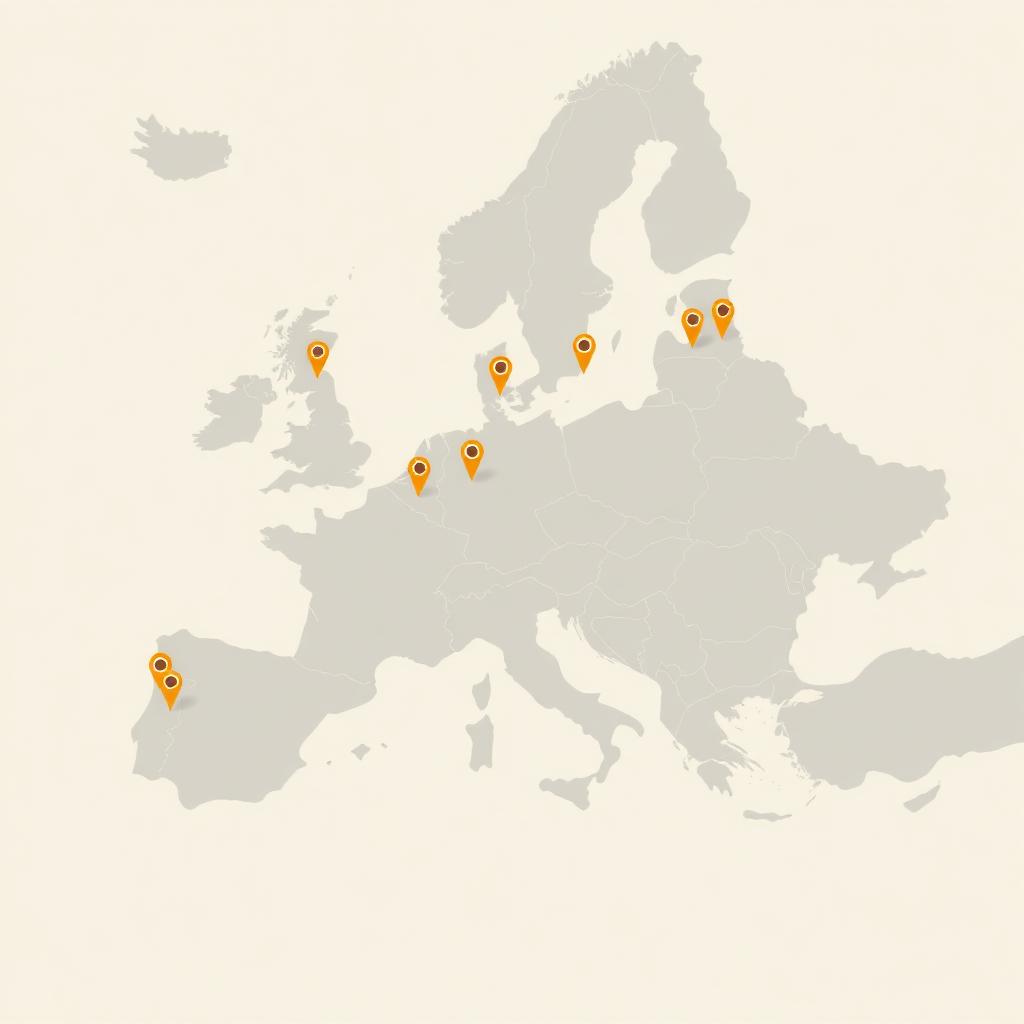
Rules change at every border
What we check first in each market. Outcomes always depend on the individual case.
Germany
Employee leasing may need an AÜG permit; the non-EU route varies with the model.
EOR in GermanyNetherlands
Highly Skilled Migrants need an IND-recognised sponsor and must meet the criteria.
EOR in NetherlandsRomania
National employer and immigration criteria, assessed under current rules.
EOR in RomaniaPoland
National permit and employer criteria, reviewed case by case.
EOR in PolandFrance
National work authorisation and employer criteria apply.
EOR in FranceUnited Kingdom
Skilled Worker sponsorship cannot supply workers for routine third-party roles.
EOR in United KingdomSerbia
A non-EU market with its own rules; EU work rights do not apply.
EOR in SerbiaEOR, EOR + Immigration or an alternative?
| Current work rights & structure | Likely model | What it involves |
|---|---|---|
| Valid permission that allows a change to the new employer | EOR | Employment, payroll and compliance through the employing entity. |
| Needs new or amended permission; EOR sponsorship is permitted | EOR + Immigration | Permit and employment coordinated as one case. |
| Sponsorship or leasing rules restrict EOR | Direct sponsorship, entity or other route | Your own entity sponsors, a local entity is set up, or another compliant structure is used. |
What the total cost is made of
We don't quote fixed prices or timelines before reviewing a case, and no authority approval can be guaranteed. Every fee is confirmed in writing before you proceed.
- Monthly EOR fee per employee
- One-off immigration service fees where a permit is needed
- Government and consular charges, set by authorities
- Employer tax and social security contributions
- Optional relocation and dependant support
- Case-specific processing times, confirmed after review

Hiring non-EU workers: common questions
For the full service, see EOR with immigration & work permits.