














Italy Checklist: Sponsoring Highly Skilled Migrant Visas
Grab a copy of a guide to international employee relocation
View E-book
Ever feel like global mobility never stops evolving? If you’re caught up in employee mobility, international assignments, or international payroll, you’ll want to pay close attention to what’s brewing on the compliance front. By 2026, changes in Social Security and totalization agreements are promising both opportunities — and surprises, some of which may catch well-prepared HR leaders off guard. Let’s demystify these shifts and see how global mobility solutions can help you stay ahead of the curve.
Social Security is more than just pensions and retirement. It’s a worldwide web of taxes, benefits, and bilateral agreements called totalization treaties, designed to prevent double taxation of globally mobile employees. Totalization agreements ensure your talent isn’t paying Social Security taxes twice, both at home and abroad. With over 30 countries participating in totalization treaties with the US alone, and countless others with their own networks, the compliance landscape is complex, layered, and ever-changing.
Today’s workforce is more international than ever. According to Mercer’s Global Talent Trends 2024 report, 84% of organizations expect international assignments and cross-border work to increase. This surge brings new urgency to global compliance — especially for Social Security and totalization. The World Economic Forum reports that more than 66 million employees work in countries other than their own, creating an intricate network of Social Security responsibility and reporting requirements that simply didn’t exist a decade ago.
As we approach 2026, several trends and changes are emerging:
1. Acceleration of Remote and Hybrid Work — The pandemic wasn’t a one-off; the shift is here to stay. Employees are logging in from everywhere, and governments are finally catching up. The European Union, for example, is reassessing cross-border rules, meaning a remote worker in Spain for a UK company could spark new reporting or payment obligations. A report from Deloitte highlights that 58% of global companies now face unexpected Social Security risks due to undefined remote work policies.
2. New Bilateral Agreements — Countries like India, Brazil, and China are negotiating new or expanded Social Security treaties. This means companies will need to update their frameworks for new jurisdictions — and fast. The US Social Security Administration is expected to add three new agreements by 2026, changing the compliance expectations for thousands of assignees.
3. Increased Audit and Penalty Activity — As governments seek lost revenue, audits are up. The OECD says cross-border Social Security non-compliance penalties have jumped 22% since 2022. Missed filings or erroneous withholdings are now far more likely to attract attention, especially in high-traffic regions like the EU and Asia-Pacific.
So, how can organizations future-proof their Social Security and totalization game?
Start by mapping out your globally mobile workforce — even those on remote or hybrid arrangements. Leverage automated mobility solutions like xpath.global to keep reporting bulletproof. Assign in-house compliance champions, schedule regular audits, and keep your eyes peeled for bilateral treaty changes (especially if you’re hiring in emerging markets). For advanced operations, consider partnering directly with a compliance technology provider who understands your sector’s unique challenges.
The world of global mobility isn’t slowing down, and neither are compliance complexities — especially in Social Security and totalization. Companies that get ahead with smart, tech-driven solutions will protect their employees, avoid costly penalties, and unlock the true potential of a globally distributed workforce. Are you ready?
What is a totalization agreement?
A totalization agreement is a bilateral treaty designed to prevent double Social Security taxation for workers who split their careers between two countries. It ensures employees and employers only pay into one Social Security system at a time.
Why are Social Security compliance requirements changing in 2026?
Due to the explosion in international remote work, new treaties under negotiation, and tightening regulatory oversight, countries are updating Social Security and totalization requirements at record speed.
How can I make sure my company is compliant?
Invest in a comprehensive global mobility solution, like xpath.global, which provides up-to-date regulatory data, automated reporting, and local expertise for every country where you operate or send employees.
What happens if I don’t comply with Social Security and totalization rules?
Non-compliance can lead to double taxation for your employees, hefty fines, delayed project launches, and reputational risk. In severe cases, employees could lose eligible Social Security benefits altogether.
Ready to transform your mobility program? Explore xpath.global’s solutions.
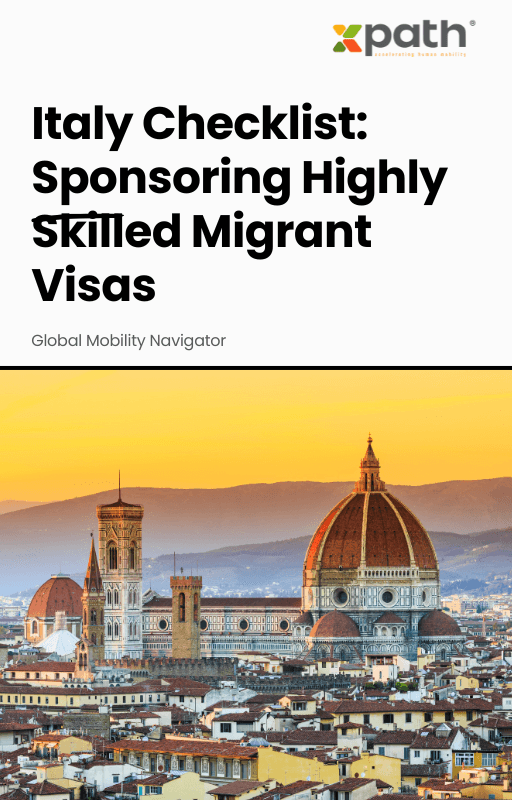
Italy Checklist: Sponsoring Highly Skilled Migrant Visas
Grab a copy of a guide to international employee relocation
View E-book