











Italy Checklist: Sponsoring Highly Skilled Migrant Visas
Grab a copy of a guide to international employee relocation
View E-book
Moving employees across borders isn’t just about visas and logistics. Over 80% of repatriates experience reverse culture shock, and family adjustment issues cause more assignment failures than any other factor. Yet most global mobility programs focus heavily on paperwork while underinvesting in the human elements that determine success. This guide shows HR and global mobility managers how to build relocation programs that address both compliance requirements and the cultural, family, and reintegration challenges that truly make or break international assignments.
| Point | Details |
|---|---|
| Family support crucial | Family adjustment issues drive most assignment failures and must be prioritized in relocation programs. |
| Tech enabled mobility | Modern platforms automate workflows, improve compliance, and provide real time visibility across visa, housing, and vendor tasks. |
| Audit benchmarking insights | Audit tools and benchmarking studies reveal gaps and drive continuous improvement in relocation processes. |
| Repatriation planning needed | Strategic planning for repatriation reduces productivity loss and supports smooth family reintegration. |
| Cultural challenges awareness | Understanding cultural adjustment for the whole family helps prevent costly errors and delays. |
The statistics on relocation failure tell a sobering story. Research shows 80% of employees experience reverse culture shock when returning home, with over half feeling unprepared for the transition. But the challenges start much earlier.
Family adjustment issues dominate the list of assignment failures. When a spouse struggles to find meaningful work or children have difficulty adapting to new schools, the entire assignment becomes unsustainable. These aren’t minor inconveniences. They’re fundamental obstacles that can force families home months or years early, wasting substantial company investment and disrupting business operations.
Bureaucratic complexity adds another layer of difficulty. Visa applications, work permits, tax filings, and housing searches involve multiple government agencies, service providers, and internal stakeholders. Without tools to optimize global mobility programs, coordination becomes overwhelming. Employees spend weeks navigating paperwork instead of focusing on their new roles.
Dual-career couples face particularly acute challenges. Both partners typically have professional ambitions and established networks. Relocation often requires one partner to sacrifice career momentum, creating resentment and relationship strain. Traditional relocation support focused solely on finding the trailing partner a job misses the deeper issue of maintaining professional identity and growth trajectory.
“The success of international assignments depends less on the employee’s technical capabilities and more on the family’s ability to adapt to new cultural contexts and maintain relationship stability under pressure.”
Recognizing these challenges allows mobility managers to design interventions that address root causes rather than symptoms. The goal isn’t just completing relocations but creating sustainable assignments where employees and families thrive. Understanding what causes failures enables you to simplify global mobility steps by anticipating problems before they escalate.
Key challenge areas include:
Technology transforms global mobility from a reactive, administrative function into a strategic capability. Modern platforms automate workflows that previously required dozens of emails and spreadsheets. Visa tracking, document management, and vendor coordination happen in centralized systems that provide real-time visibility.
Audit tools and benchmarking reveal hidden inefficiencies in your mobility processes. GLOMO and KPMG benchmarking studies help organizations compare their practices against industry standards, identifying where processes lag or compliance gaps exist. These insights drive continuous improvement and prepare teams for repatriation challenges before assignments end.
Data-driven decision making replaces guesswork. Analytics show which relocations cost more than projected, which destinations create the most challenges, and which service providers deliver the best outcomes. This information helps you allocate budgets more effectively and negotiate better vendor contracts.
| Tool category | Key features | Primary benefit |
|---|---|---|
| Audit platforms | Process mapping, compliance checking, gap analysis | Identifies inefficiencies and risks before problems occur |
| Benchmarking services | Industry comparisons, cost analysis, policy evaluation | Provides context for performance and spending decisions |
| Workflow automation | Task assignment, deadline tracking, document routing | Reduces manual work and ensures consistent execution |
| Analytics dashboards | Cost reporting, assignment tracking, vendor performance | Enables data-driven optimization and strategic planning |
Integrating global mobility technology options with existing HR systems creates seamless data flow. Employee records, assignment details, and relocation costs sync automatically, eliminating duplicate data entry and reducing errors. Real-time updates keep all stakeholders informed without constant status meetings.
Pro Tip: Start technology implementation with your most complex relocation routes first. These high-volume, high-complexity moves deliver the fastest return on investment and help you refine processes before expanding to simpler assignments.
Compliance management becomes proactive rather than reactive. Automated systems flag upcoming visa renewals, tax filing deadlines, and policy violations before they create problems. This shift from firefighting to prevention reduces stress for both mobility teams and relocating employees.
The right technology stack includes:
Choosing tools for global mobility audit requires evaluating your specific pain points. Organizations with compliance concerns prioritize different features than those focused on cost control or employee experience. Define your primary objectives before selecting technology partners.
Supporting dual-career couples requires moving beyond basic job search assistance. Research confirms that family and spouse issues cause most assignment failures, and effective support must address career capital, not just employment.

Career capital encompasses skills, networks, and professional reputation. When a partner relocates, they often lose access to their established network and face credential recognition challenges. Simply finding any job doesn’t preserve career capital. Partners need opportunities to maintain professional growth trajectories and build relevant experience.
Shared vision between partners forms the foundation for assignment success. Before accepting international roles, couples must align on how the move serves both partners’ long-term goals. This conversation addresses career sacrifices, timeline expectations, and post-assignment plans. Without this alignment, resentment builds as one partner feels their needs are ignored.
Cultural integration programs help families adapt to new environments. Language training, cultural orientation, and destination services ease the transition. These investments pay dividends by reducing the time families spend feeling lost and accelerating their ability to function effectively in daily life.
Steps to support family relocation effectively:
Pro Tip: Invest in pre-departure cultural training that includes the entire family, not just the employee. Children and spouses face their own adjustment challenges, and preparing them reduces overall family stress.
Customized support plans recognize that each family’s needs differ. A single professional relocating alone requires different resources than a family with school-age children or a dual-career couple. Flexible benefit packages allow families to allocate support where they need it most, whether that’s additional housing search assistance, career coaching, or educational consulting.
Mastering employee relocation programs means treating family support as integral to assignment success, not an optional add-on. Organizations that invest in comprehensive family programs see lower failure rates, higher employee satisfaction, and better business outcomes from international assignments.
Repatriation challenges catch many organizations off guard. After investing heavily in outbound relocation, companies often treat the return home as automatic. This oversight creates serious problems. Studies show 59% of repatriation challenges stem from bureaucratic issues, while 34% involve professional reintegration difficulties.
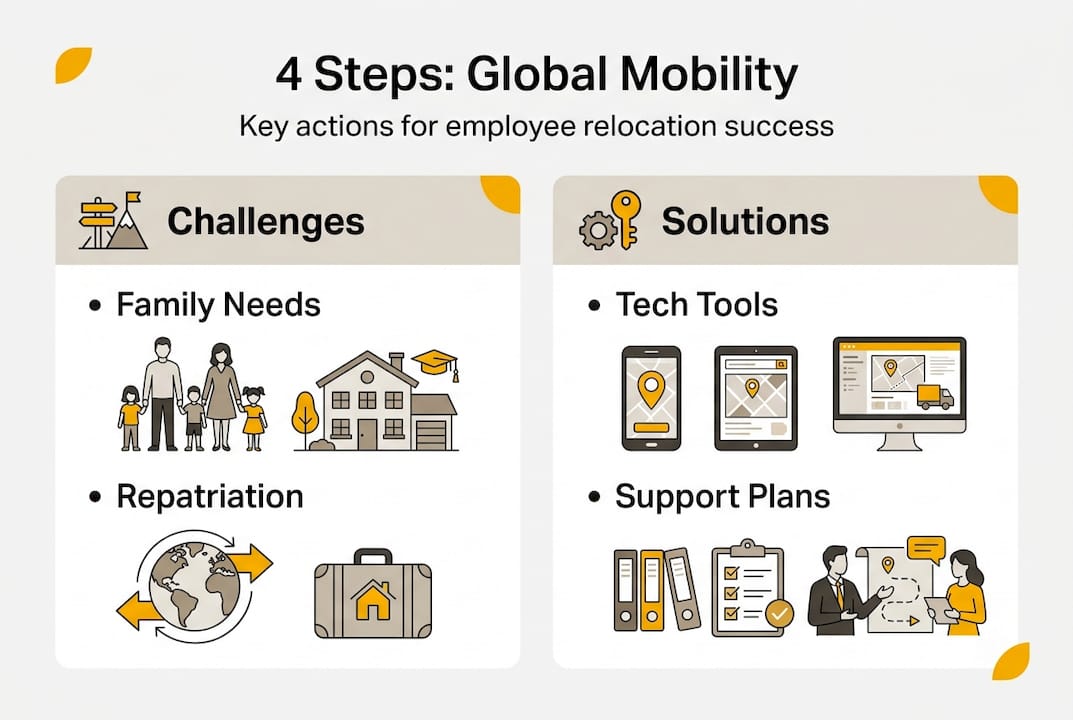
Reverse culture shock affects returning employees more severely than many expect. After adapting to a different country, employees often find their home culture feels foreign. Professional networks have evolved without them, organizational processes have changed, and their international experience may not be valued or utilized effectively.
Career path planning must start before assignments begin. Employees need clarity on how international experience fits into their long-term career trajectory. Without this roadmap, they return to find no suitable role available, leading to frustration and often departure to competitors who better recognize their enhanced capabilities.
Bureaucratic hurdles during repatriation include tax equalization settlements, shipping household goods, closing foreign bank accounts, and canceling work permits. These tasks require coordination across multiple countries and service providers. Delays create frustration during what should be a positive homecoming.
| Repatriation pitfall | Solution approach |
|---|---|
| No suitable role available upon return | Define return position before assignment begins, review annually |
| Skills and experience not utilized | Create knowledge transfer programs, assign mentorship roles |
| Reverse culture shock and readjustment stress | Provide repatriation counseling, arrange peer support groups |
| Tax and administrative complications | Start settlement processes 90 days before return date |
| Family struggles readjusting to home country | Offer family counseling and reintegration support |
| Loss of international assignment benefits | Phase out benefits gradually rather than abruptly |
Best practices for repatriation management:
Proper planning preserves the talent and knowledge gained during international assignments. Streamlining workforce with global mobility solutions includes building repatriation into the full assignment lifecycle, not treating it as an afterthought. Organizations that excel at repatriation retain more international assignees and build stronger global leadership pipelines.
Building efficient, compliant relocation programs requires integrated technology and expert support. xpath.global provides a unified platform that manages every aspect of international employee mobility, from initial assignment planning through repatriation.
The platform connects HR teams, employees, and service providers in one digital environment, eliminating the fragmented spreadsheets and email chains that create inefficiencies. Automated workflows ensure consistent processes while reducing administrative burden. Real-time visibility into assignment progress, costs, and compliance status gives mobility managers the control they need.
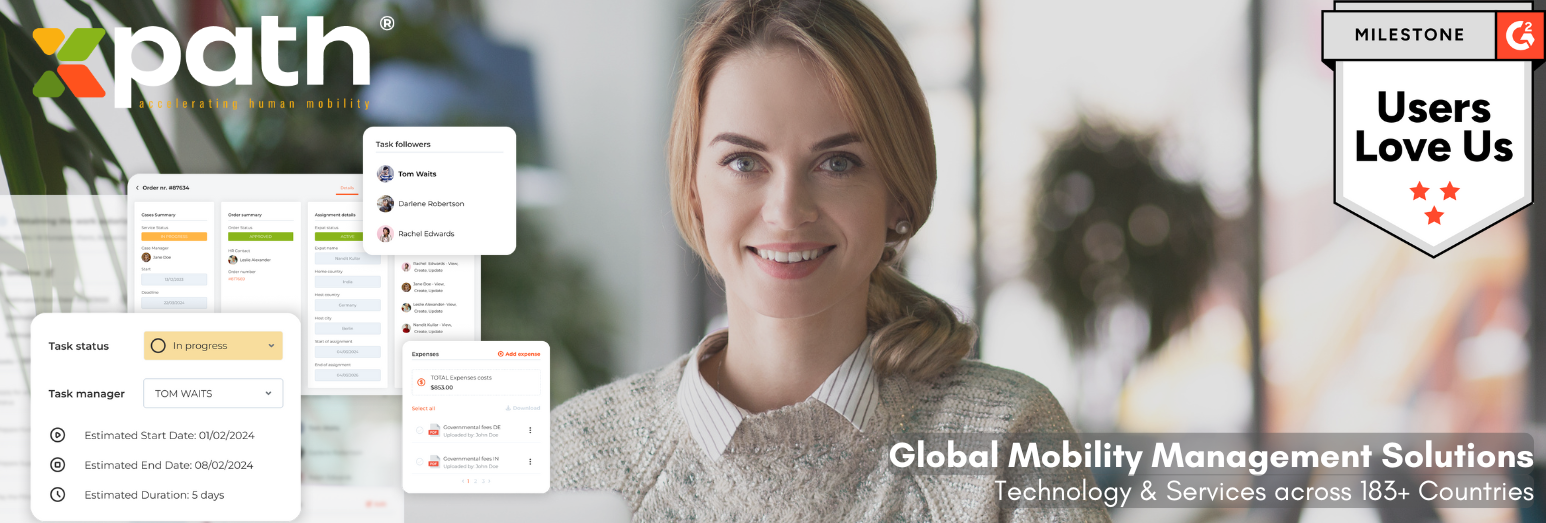
xpath.global’s vendor marketplace provides access to over 60,000 mobility services across 183 countries, including immigration lawyers, relocation companies, tax advisors, and destination services providers. This transparency enables better vendor selection and cost management. Comprehensive employee relocation programs address both logistical requirements and family support needs.
The platform’s assignment management tools help you design competitive packages, track employee progress, and plan for repatriation from day one. Advanced analytics reveal program performance and optimization opportunities. By combining global mobility technology with consulting services, xpath.global delivers complete global mobility solutions that enhance compliance, reduce costs, and improve employee experience throughout the assignment lifecycle.
Family and spouse issues represent the primary cause of assignment failures, particularly when trailing partners struggle with career disruption and cultural adjustment. Bureaucratic obstacles create additional stress and uncertainty. Addressing these factors early through comprehensive support programs significantly improves assignment success rates.
Technology automates visa tracking, document management, and vendor coordination, reducing manual administrative work by up to 60%. Centralized platforms provide real-time visibility into assignment progress and costs, enabling data-driven decisions. Analytics identify process inefficiencies and compliance risks before they become expensive problems, while employee portals improve the relocation experience through self-service access to information and resources.
Supporting dual-career couples requires helping trailing partners maintain career capital through professional development, networking opportunities, and meaningful work rather than just any employment. Facilitating shared vision alignment between partners before assignment acceptance ensures both individuals see how relocation serves their long-term goals. Customized support plans address each couple’s unique professional and personal circumstances.
Proper repatriation planning prevents productivity loss and employee disengagement by ensuring returning employees have suitable roles that utilize their international experience. Early planning addresses reverse culture shock, professional reintegration challenges, and bureaucratic complications. Organizations that neglect repatriation lose valuable talent and waste the investment made in developing global capabilities.
Previous article
Italy Checklist: Sponsoring Highly Skilled Migrant Visas
Grab a copy of a guide to international employee relocation
View E-book