











Italy Checklist: Sponsoring Highly Skilled Migrant Visas
Grab a copy of a guide to international employee relocation
View E-book
When an international assignment goes off the rails, the consequences rarely stay quiet. Tax authorities issue penalties, immigration violations surface during audits, and employees stranded in the wrong visa category become a reputational liability. Manual tracking methods fail at scale, causing missed deadlines and compounding compliance risk across every open assignment. This guide walks HR professionals and global mobility managers through the most effective assignment tracking methods available today, from foundational processes to technology-driven platforms, so you can protect your organization and your people.
| Point | Details |
|---|---|
| Automated tracking is essential | Tech platforms offer real-time dashboards and compliance alerts that manual methods can’t match. |
| Routine compliance checks matter | Regular risk reviews help prevent costly mistakes like missed tax thresholds and visa overstays. |
| Centralized data boosts visibility | Keeping all assignment data in one system reduces silos and improves interdepartmental coordination. |
| Short-term assignments carry hidden risks | Crossing key thresholds can trigger tax or PE exposure if not closely monitored. |
Before diving into the tools and techniques, it is critical to understand the business and compliance stakes involved in tracking international assignments. Assignment tracking, in the context of global mobility, refers to the systematic monitoring of every stage of an employee’s international posting, covering immigration status, tax obligations, payroll alignment, cost management, and employee wellbeing.
The evolving role of global mobility in HR has elevated tracking from an administrative task to a strategic function. When tracking breaks down, the consequences are concrete and costly:
Efficient tracking minimizes compliance risks through real-time technology platforms, giving HR teams the visibility they need to act before thresholds are crossed rather than after penalties are issued.
The ROI case is equally strong. Organizations that track assignments accurately can control costs, benchmark program performance, and retain mobile talent by delivering a consistent, well-supported experience. Poor tracking, by contrast, erodes trust and inflates program costs through reactive remediation.
Now that the stakes are clear, let’s compare the main categories of assignment tracking methods and see how technology changes the game.
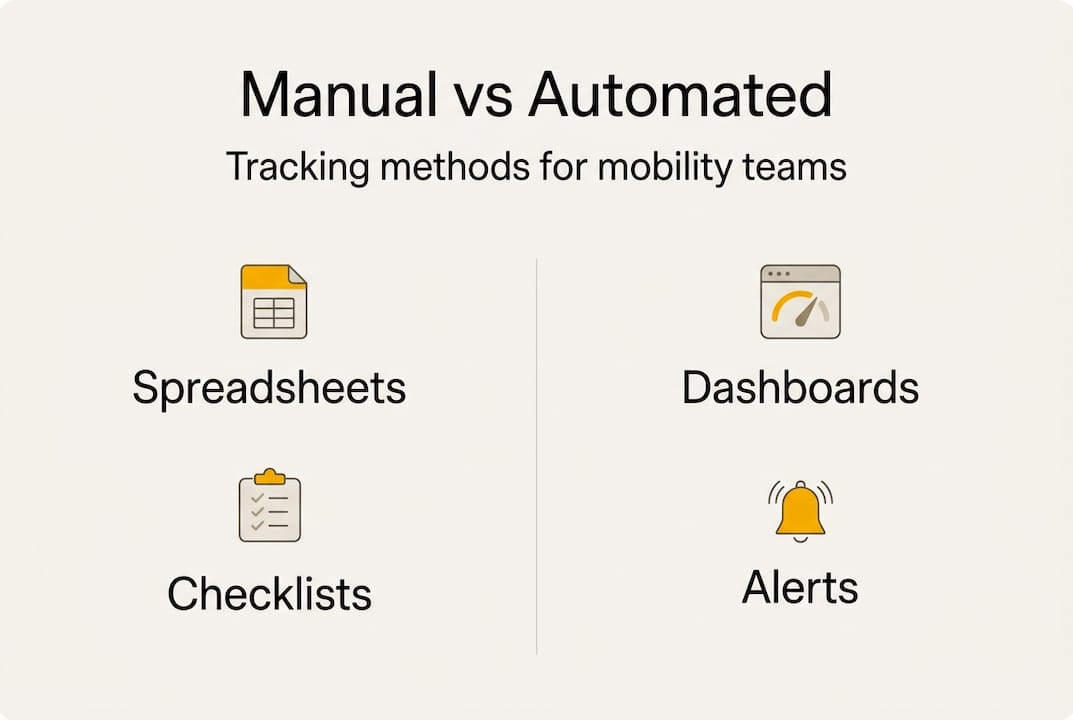
Manual methods include spreadsheets, shared checklists, and email-based coordination. They are fast to set up and require no software investment, which makes them attractive for small programs. However, 72% of teams still depend on spreadsheets despite facing serious scalability issues as assignment volume grows. Version control failures, missed deadline alerts, and siloed data are endemic to manual approaches.
Automated platforms centralize assignment data, trigger compliance alerts, and provide real-time dashboards that give mobility managers a live view of every active assignment. Dedicated platforms improve analytics by 40% compared to manual methods, enabling faster decisions and more consistent compliance outcomes.
The table below summarizes the key differences:
| Feature | Manual methods | Automated platforms |
|---|---|---|
| Setup time | Fast | Moderate |
| Scalability | Low | High |
| Compliance alerts | None | Real-time |
| Data accuracy | Error-prone | Centralized and validated |
| Reporting | Manual, time-consuming | Automated dashboards |
| Cost visibility | Limited | Full cost tracking |
| Audit readiness | Weak | Strong |
For teams managing fewer than ten assignments annually, a structured spreadsheet with strict version control may suffice. Beyond that threshold, the risk profile shifts decisively toward automated solutions. Assignment tracking platforms like xpath.global and purpose-built tools such as Mercer’s AssignmentPro offer workflow automation, milestone tracking, and integrated vendor management that manual methods simply cannot replicate.
Pro Tip: When piloting a new tracking platform, run it in parallel with your existing process for the first 60 days. This lets you validate data accuracy and build stakeholder confidence before fully transitioning.
Once you have chosen your tracking approach, ensure your system covers all the operational essentials, from risk checks to automated reminders. Structured measurement yields 85% higher success rates in global mobility programs, which means the architecture of your tracking system directly affects outcomes.
A well-designed system operates across three phases:
Pre-assignment, ongoing, and end-of-assignment reviews are the structural backbone of consistent compliance across all assignment types.
The table below outlines the core components every tracking system should include:
| Component | Purpose |
|---|---|
| Immigration status tracker | Monitors visa type, expiry, and renewal timelines |
| Day-count monitor | Flags proximity to 183-day and PE thresholds |
| Cost management module | Tracks actuals against approved budgets |
| Document repository | Stores contracts, permits, and tax filings |
| Automated alerts | Notifies HR and employees of upcoming deadlines |
| Reporting dashboard | Provides program-wide visibility for leadership |
Centralized data access is non-negotiable. Payroll, tax, legal, and mobility teams must work from the same data set to avoid conflicting actions. Case management tools that integrate with HRIS and payroll systems eliminate the data silos that cause most compliance failures.

Pro Tip: Schedule repatriation planning triggers inside your tracking system at the 90-day mark before assignment end. Teams that plan repatriation proactively report significantly lower attrition among returning assignees.
Investing in upgraded technology for HR is not optional for organizations managing assignments across multiple jurisdictions. The complexity simply outpaces what manual processes can handle.
Even with solid systems, you must be vigilant. Here is where assignment tracking methods can help you steer clear of high-risk pitfalls.
The most consequential risks in international assignment management include:
The most effective defense against these risks is automation combined with policy clarity. When your tracking system flags a threshold breach automatically, your team can intervene before a compliance event occurs rather than managing the fallout afterward.
Practical solutions include setting automated day-count alerts at 150 days (not 183), conducting quarterly immigration reviews for all active assignments, and maintaining a clear policy matrix that defines which assignment types require which visa categories. Platforms that help you digitalize employee relocation processes make these controls systematic rather than dependent on individual vigilance.
After avoiding compliance pitfalls, the focus shifts to embedding these methods seamlessly into your HR team’s existing processes.
Integration works best when it follows a structured sequence:
Employee self-service portals boost satisfaction while maintaining HR oversight, because employees who can track their own assignment progress and upload documents independently reduce the administrative load on mobility teams significantly.
Centralizing data also means that when a tax advisor needs to review an employee’s day count or a payroll team needs to confirm a cost-of-living adjustment, the information is available instantly without email chains or manual lookups. This is what smarter global HR workflows look like in practice.
Pro Tip: Build a compliance calendar inside your tracking platform that maps every active assignment against key regulatory deadlines, including visa renewals, tax filing dates, and social security reporting windows. A single shared calendar eliminates the coordination gaps that cause most compliance failures.
With best practices in place, the right platform becomes your competitive edge for reliable compliance and efficiency. xpath.global is built specifically for the complexity that global mobility teams face daily, combining AI-driven compliance alerts, real-time dashboards, and structured case management into a single unified environment.
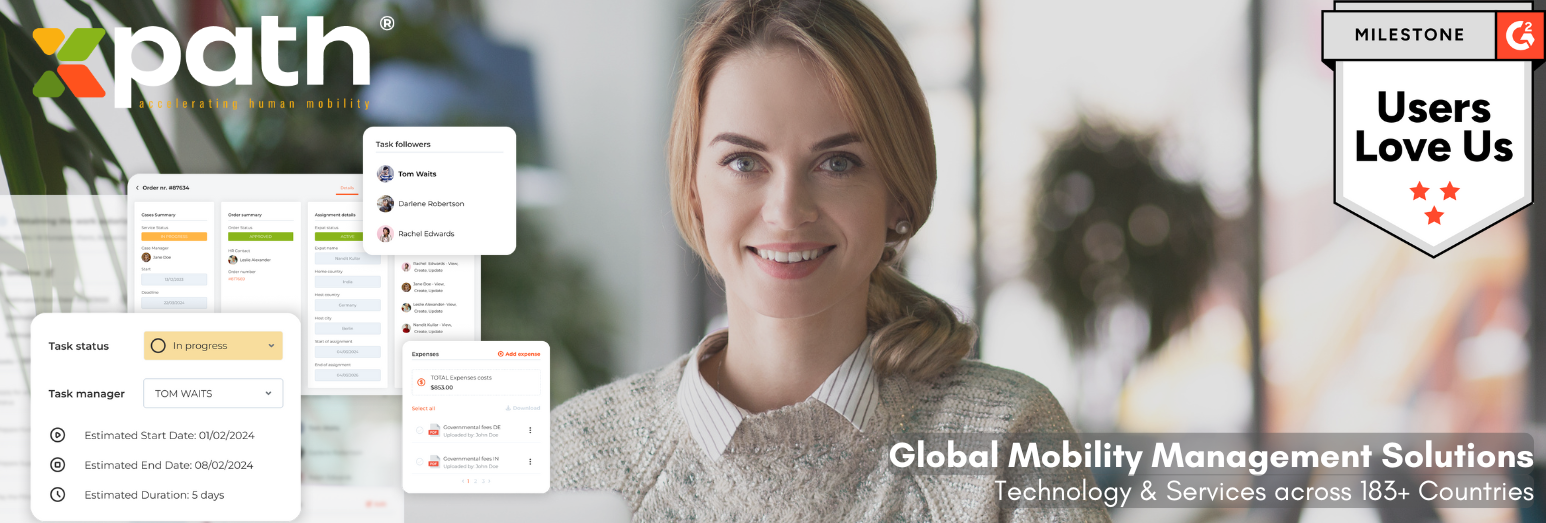
The platform’s case management system tracks every assignment milestone, from pre-departure risk assessment through repatriation, while automated alerts ensure no threshold or deadline is missed. For teams evaluating their options, choosing the right mobility technology is a critical decision that shapes program performance for years. xpath.global’s vendor marketplace, covering 60,000 services across 183 countries, means your tracking system connects directly to the service providers who execute each assignment. Ready to see how it works for your program? Contact our HR experts for a tailored demo, or start with the mobility compliance checklist to benchmark your current program.
The 183-day rule determines tax residency or social security liability for employees on international assignment when they spend more than 183 days in a host country within a defined period. Tracking day counts accurately is essential to avoiding unintended tax exposure.
Automated platforms provide real-time compliance alerts, centralize assignment data across HR, payroll, and tax teams, and flag visa, threshold, or tax issues before they generate penalties, replacing reactive remediation with proactive management.
Manual methods like spreadsheets can manage a small number of assignments effectively, but they become error-prone and difficult to audit as volume increases, making the transition to an automated platform a practical necessity beyond roughly ten active assignments.
Quarterly reviews are structured checkpoints that reassess immigration status, tax exposure, and employee wellbeing for every active assignment. Ongoing quarterly reviews allow mobility teams to identify compliance issues early and adjust assignment plans before thresholds are breached.
A PE risk occurs when an international assignment creates a taxable business presence in the host country, typically because the employee holds a strategic or decision-making role and exceeds PE thresholds, exposing the organization to corporate tax liability in that jurisdiction.

Italy Checklist: Sponsoring Highly Skilled Migrant Visas
Grab a copy of a guide to international employee relocation
View E-book