






Managing employee relocation programs is one of the most complex and costly challenges facing HR professionals and global mobility managers today. International relocations involve navigating immigration laws, tax compliance, cultural integration, and substantial financial investments that can exceed $78,500 per employee. Without a structured program, organizations risk compliance violations, budget overruns, and employee dissatisfaction that leads to early returns. This guide provides practical steps to prepare, execute, and optimize employee relocation programs that balance compliance requirements with cost control while supporting successful employee transitions across borders.
Preparing your employee relocation program
Before moving any employee internationally, you need to establish foundational elements that ensure legal compliance and operational clarity. The preparation phase determines whether your relocation program will run smoothly or encounter costly obstacles.
Start by defining the relocation type. International secondment involves temporary relocation while the employee remains on home payroll, requiring tripartite agreements that cover duration, duties, salary reimbursement, immigration status, and tax treaty implications. Permanent transfers require different documentation and typically involve transferring the employee to local payroll with corresponding benefits adjustments.
Establish comprehensive tripartite agreements between the home entity, host entity, and employee that address:
🔸Assignment duration and specific start and end dates
🔸Detailed job responsibilities and reporting structure in the host location
🔸Salary payment mechanisms and currency considerations
🔸Reimbursement processes for relocation expenses
🔸Immigration sponsorship responsibilities and work permit obligations
🔸Tax equalization or protection arrangements
🔸Benefits continuation or modification during assignment
Ensure immigration and tax compliance from day one. Research visa requirements, work permit processing times, and any quota limitations in the destination country. Coordinate with immigration attorneys who specialize in the host jurisdiction to avoid application rejections or processing delays that can derail relocation timelines. Similarly, engage tax advisors early to structure compensation in ways that leverage tax treaties and minimize double taxation exposure for both employee and employer.
Document all parties’ roles with precision. Ambiguity in relocation agreements creates disputes over who pays for what, when payments are due, and how to handle unexpected costs. Clear documentation also supports global telecommuting compliance steps when employees work remotely across borders before or after physical relocation.
Pro Tip: Create a relocation policy handbook that standardizes your approach across all international moves. This ensures consistency, speeds up future relocations, and provides a reference point for employees and managers navigating the process.
| Relocation Type | Payroll Location | Agreement Type | Primary Compliance Focus |
|---|---|---|---|
| Temporary Secondment | Home country | Tripartite | Tax treaties, work permits |
| Permanent Transfer | Host country | Employment contract | Immigration, local labor law |
| Short-term Assignment | Home country | Assignment letter | Business visitor rules, tax |
Executing international employee relocations efficiently
With preparation complete, execution requires coordinating multiple logistics streams while managing costs and supporting employee wellbeing throughout the transition.

Estimate realistic relocation costs early in the planning process. The global average relocation cost reaches $78,500 per employee for international moves, with household goods shipment alone averaging $15,000. Budget for additional expenses including temporary housing, travel for pre-assignment visits, spousal employment support, and cultural training. Underestimating costs creates budget shortfalls that force uncomfortable conversations mid-relocation.
Provide comprehensive employee support to address the human side of relocation. Research shows that spousal issues cause 40% of early returns from international assignments, making family support a critical investment. Offer destination services that help spouses find employment, assist with school selection for children, and provide cultural orientation that eases the adjustment period.
Follow this execution sequence for smooth relocations:
🔸Secure immigration approvals and work permits before the employee gives notice in their current location
🔸Arrange temporary housing for the first 30 to 60 days while the employee searches for permanent accommodation
🔸Coordinate household goods shipment timing to minimize storage costs and gaps in availability
🔸Schedule pre-departure orientation covering cultural norms, tax filing requirements, and emergency contacts
🔸Establish regular check-ins during the first 90 days to address challenges before they escalate
Implement communication plans that keep employees informed throughout each stage. Uncertainty creates anxiety that undermines relocation success. Provide a single point of contact who can answer questions, coordinate vendors, and troubleshoot issues. Use technology platforms that give employees visibility into their relocation status, document requirements, and expense reimbursement processes.
Leverage cost containment in mobility policies by establishing spending caps for discretionary expenses while maintaining flexibility for necessary costs. Track all relocation expenses in real time to identify budget variances early and adjust future estimates based on actual data.
Pro Tip: Build relationships with relocation service providers in your most common destination cities. Preferred vendor arrangements often yield better pricing and service quality than sourcing providers for each individual move.
| Cost Category | Domestic Average | International Average | Cost Control Strategy |
|---|---|---|---|
| Total Relocation | $3,200 to $5,000 | $78,500 | Tiered policy by level |
| Household Goods | $2,000 to $3,000 | $15,000 | Weight limits, decluttering incentives |
| Temporary Housing | $3,000 to $5,000 | $8,000 to $12,000 | Duration caps, corporate housing |
Apply workforce management tips for mobility to maintain productivity during transitions and ensure relocated employees integrate successfully into host location teams.
Ensuring tax and compliance accuracy in relocation programs
Tax compliance represents one of the highest-risk areas in employee relocation programs, with improper structuring leading to significant penalties for both employers and employees.
Understand Section 409A implications for relocation reimbursements. The IRS treats certain relocation reimbursements as deferred compensation subject to Section 409A if not properly structured, triggering a 20% excise tax plus penalties and interest. Unlimited reimbursement policies or those without clear expense definitions create the highest risk.
Avoid these common 409A violations in relocation programs:
🔸Lifetime reimbursement caps without annual limits
🔸Undefined eligible expense categories
🔸Reimbursement policies that extend beyond two years
🔸Gross-up payments calculated on undefined amounts
Prefer structured alternatives that minimize tax risk. Cash bonuses paid as taxable compensation avoid 409A complications entirely while giving employees flexibility in how they use relocation funds. If you offer reimbursements, implement annual caps, define eligible expenses precisely, and require submission within a specific timeframe after the expense is incurred.
Coordinate with tax experts who understand both home and host country regulations. International assignments often create tax obligations in multiple jurisdictions, and tax treaties don’t automatically prevent double taxation without proper documentation and filing. Establish tax equalization policies that hold employees harmless from tax disadvantages while preventing windfalls from favorable tax treatment.
Maintain detailed records and audit trails for all relocation-related compensation. Document the business purpose for each relocation, track all payments and reimbursements, and retain supporting receipts and invoices. These records prove essential during tax audits and support your compliance position if authorities question your approach.
“Relocation reimbursement arrangements must comply with Section 409A documentation and timing requirements to avoid excise taxes. Employers should implement annual caps, define eligible expenses clearly, and consider taxable cash allowances as safer alternatives to open-ended reimbursement policies.”
Implement global mobility compliance frameworks that address tax, immigration, social security, and labor law requirements across all assignment locations.
Leveraging incentives and technology to optimize relocation success
Modern relocation programs go beyond basic logistics to actively enhance employee satisfaction and program outcomes through targeted incentives and technology enablement.
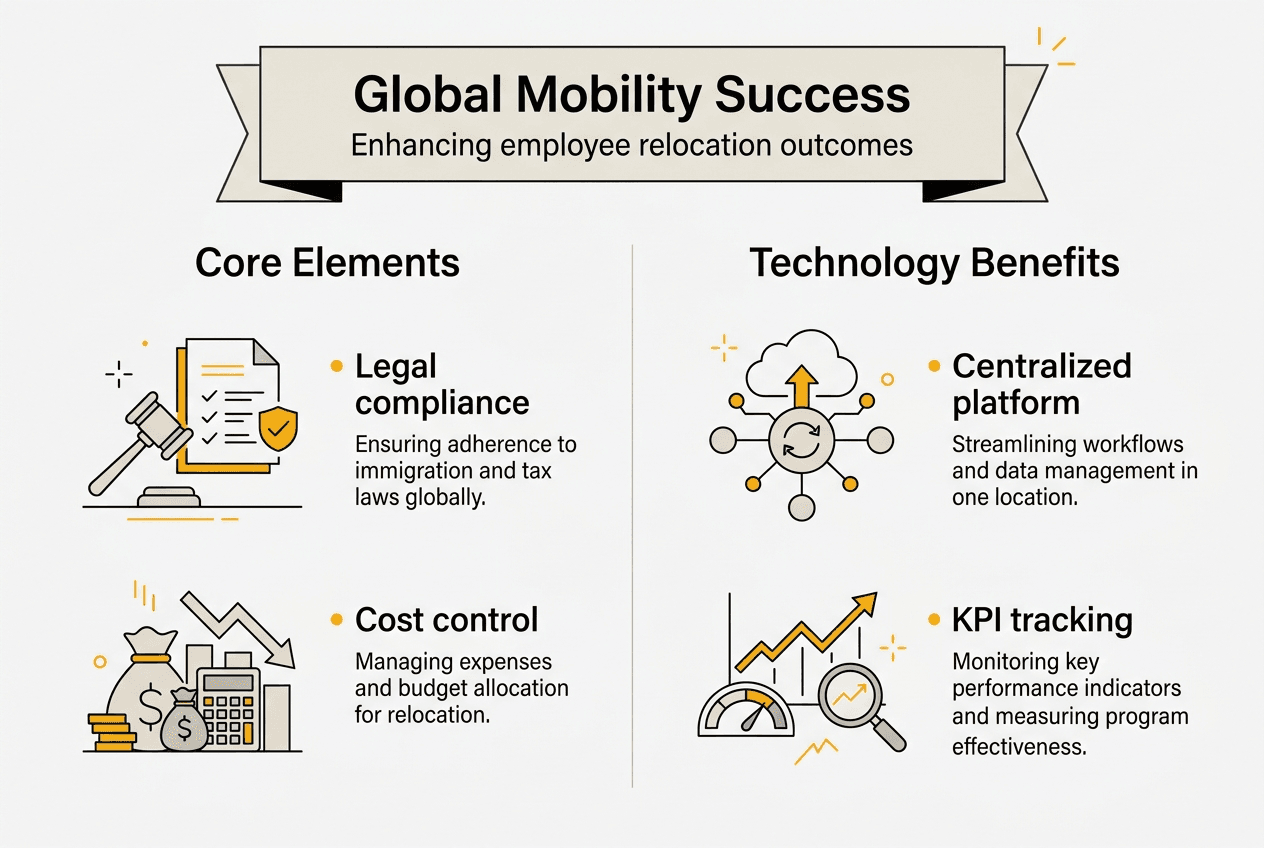
Use location-specific incentives that address unique destination challenges. Programs like Tulsa Remote demonstrate how $10,000 stipends increase remote workers’ community engagement, income potential, entrepreneurship, and long-term retention when designed around location-specific needs. Apply this principle by tailoring incentives to the actual challenges employees face in each destination.
Compare common incentive structures:
🔸Cash stipends provide maximum flexibility but require employees to manage vendor relationships independently
🔸Housing allowances address the largest single relocation expense and simplify budgeting
🔸Spousal career support demonstrates commitment to family wellbeing and reduces a primary cause of assignment failure
🔸Education assistance for children removes a significant barrier for employees with families
Incorporate digital global mobility platforms that centralize program management. Technology solutions eliminate the spreadsheet chaos that plagues traditional relocation management by providing a single system of record for all assignment data, documents, and workflows. Automated task management ensures nothing falls through the cracks while giving stakeholders real-time visibility into relocation status.
Track engagement and outcomes through mobility software analytics. Measure key performance indicators including time to productivity, assignment completion rates, cost per relocation, and employee satisfaction scores. Use this data to continuously refine your program and demonstrate ROI to executive stakeholders.
Support remote workers relocating with tailored approaches that recognize their unique needs. Remote employees often have more flexibility in timing their moves but may lack the urgency that comes with office-based roles. Provide relocation incentive programs that make moves attractive while maintaining productivity during transitions.
Pro Tip: Survey relocated employees at 30, 90, and 180 days to identify pain points in your relocation process. This feedback loop reveals improvement opportunities that aren’t visible from the HR perspective.
| Technology Feature | Benefit | Impact on Program Success |
|---|---|---|
| Centralized case management | Single source of truth | Reduces errors, improves visibility |
| Automated workflows | Consistent processes | Ensures compliance, saves time |
| Vendor marketplace | Transparent pricing | Controls costs, simplifies sourcing |
| Employee self-service portal | Reduced HR workload | Improves experience, increases efficiency |
Explore global mobility technology choices that align with your program scale, complexity, and strategic objectives.
Boost your global mobility program with expert solutions
Managing employee relocations requires balancing compliance complexity, cost control, and employee experience across multiple countries and assignment types. xpath.global provides the technology platform and expert services that transform fragmented relocation processes into streamlined global mobility programs. Our unified ecosystem connects HR teams, employees, and service providers in one digital environment, eliminating the spreadsheets and email chains that create compliance risks and administrative burden. Access 60,000+ vetted mobility services across 183 countries while maintaining complete visibility into program costs and outcomes.
Whether you’re designing your first international relocation program or optimizing an established mobility function, xpath.global delivers the tools and expertise you need. Discover how strong global mobility programs integrate remote work flexibility with structured assignment management, explore global mobility technology options that scale with your needs, or review comprehensive global mobility solutions that address every aspect of international workforce management.
Frequently asked questions
What are the most common costs associated with international employee relocations?
Major costs include household goods shipment averaging $15,000, temporary housing, immigration fees, and spousal support services. The total international relocation cost averages $78,500 per employee. Understanding these cost drivers helps you budget accurately and identify opportunities for cost containment without compromising employee support.
How can relocation incentive programs improve employee retention?
Incentives such as location-specific stipends increase community engagement and employee satisfaction with their relocation decision. Targeted programs address spousal employment and family adjustment challenges that cause 40% of early assignment returns. Research shows 72% of relocated employees stay with their employer for two or more years when properly supported. Well-designed relocation incentives demonstrate organizational commitment and reduce turnover costs.
What tax compliance risks should HR watch for in relocation reimbursements?
Watch for unlimited or undefined relocation expense reimbursements that trigger Section 409A violations and 20% excise tax penalties. Structured caps, clearly defined eligible expenses, and time-limited reimbursement periods help avoid these costly mistakes. Consider taxable cash bonuses as safer alternatives to open-ended reimbursement policies. Maintaining global mobility compliance requires coordinating with tax experts who understand both IRS rules and international tax treaty implications.
How long does it typically take to complete an international employee relocation?
International relocations typically require three to six months from initial planning to employee arrival in the host location. Immigration processing alone can take two to four months depending on visa type and country. Add time for housing search, household goods shipment, and pre-departure preparation. Starting the process early and maintaining clear communication prevents timeline compression that increases costs and stress.
Should we use a relocation management company or manage relocations internally?
The decision depends on your relocation volume, internal expertise, and technology capabilities. Companies relocating fewer than 10 employees annually often manage internally with support from specialized vendors. Higher volumes benefit from technology platforms that centralize vendor management, automate workflows, and provide cost visibility without the markup structure of traditional relocation management companies. Evaluate your needs against available resources and consider hybrid approaches that combine internal coordination with external expertise for complex compliance matters.
Recommended
- Remote Work Made Easy With a Strong Global Mobility Program – xpath.global
- Remote Workers Enticed to Relocate via Incentives – xpath.global
- How to find talent in a shrinking global talent pool – xpath.global
- 10 Powerful Ways Global Mobility Technology Is Changing Workforce Management – xpath.global
- Employee Retention Solutions, Lower Turnover | OpenElevator