






TL;DR:
- Managing expatriate assignments requires focusing on cultural, emotional, and family support, not just logistics.
- Clear expectations, holistic candidate assessment, and ongoing cultural and wellbeing training reduce failure rates.
- Structured monitoring and support throughout the assignment improve retention and overall success.
Expatriate assignments represent some of the most significant investments multinational companies make in their talent strategies, yet failure rates reach 33% due to family dissatisfaction, cultural misalignment, and unmet expectations. The financial cost of a failed assignment can exceed twice the assignee’s annual salary when you factor in relocation expenses, lost productivity, and replacement costs. Yet many organizations still rely on outdated, logistics-first approaches that treat expatriate management as a compliance exercise rather than a people-centered program. The tips outlined here give HR professionals and global mobility managers a structured, evidence-backed framework to reduce risk, improve retention, and turn international assignments into genuine strategic assets.
Key Takeaways
| Point | Details |
|---|---|
| Set clear objectives | Well-defined goals and clear expectations are essential for assignment success. |
| Select holistically | Look beyond technical skills to resilience and family readiness. |
| Prioritize human support | Cultural, emotional, and family support often outperforms logistics spending. |
| Monitor and adapt | Continuous feedback and adaptation help prevent assignment failures early. |
Clarify assignment objectives and set expectations
With the risks of assignment failure clearly in focus, the first and most foundational step is ensuring that objectives are documented, measurable, and mutually understood by all parties before departure.
Unmet expectations are a leading cause of expat assignment failure, outpacing technical incompetence as a driver of early returns. This is a critical insight. An assignee can be technically brilliant and still disengage or leave if the role does not match what was promised, if the career development pathway is unclear, or if the family was not adequately prepared for the realities of the host location.
Documenting assignment goals in a formal assignment charter is a practical first step. This document should define the business purpose of the assignment, the assignee’s key performance indicators, reporting relationships in both the home and host country, and the expected duration and repatriation plan. Without this foundation, misaligned expectations will surface at the worst possible time, typically six to twelve months into the assignment.
Communication practices matter just as much as documentation. HR teams should conduct structured pre-departure conversations that include:
- Assignment scope and deliverables: What success looks like at six months, one year, and assignment end
- Compensation and benefits clarity: Tax equalization policies, housing allowances, and cost-of-living adjustments explained in plain terms
- Family expectations: Schooling options, spousal employment restrictions, healthcare access, and social integration support
- Career continuity: How the assignment connects to the assignee’s long-term career trajectory within the organization
- Repatriation planning: What role or opportunity awaits the assignee upon return
Management alignment is equally important. Home-country managers and host-country supervisors must agree on performance expectations, communication cadence, and decision-making authority. Ambiguity at the managerial level creates confusion and disengagement at the assignee level.
Understanding the international assignment failure causes that most commonly derail programs helps HR teams ask the right questions during pre-departure planning. Reviewing these patterns systematically before each assignment, rather than only after a failure occurs, is a mark of a mature global mobility program.
Pro Tip: Schedule a structured pre-departure alignment meeting that includes the assignee, their spouse or partner, the home-country HR business partner, and the host-country manager. This single conversation, if documented and followed up on, can resolve more potential failure points than any policy document alone. Explore preparing for success as a reference framework for structuring this meeting.
Select the right candidate with a holistic framework
Having outlined the importance of expectations, the next critical factor is choosing the right assignee. Technical expertise is necessary but not sufficient. The most capable engineer or finance director can struggle abroad if they lack emotional resilience, cultural curiosity, or a stable family support system.

Comprehensive pre-assignment preparation requires assessing candidates across four dimensions: technical skills, emotional resilience, cultural adaptability, and family readiness. Organizations that evaluate only the first dimension consistently report higher rates of early return and assignment dissatisfaction.
Research also confirms that expat experience adds measurable career value, which means high-potential employees actively seek these opportunities. The challenge is matching ambition with genuine suitability.
A structured selection framework should evaluate candidates across the following criteria:
| Selection dimension | Key indicators to assess |
|---|---|
| Technical competence | Role-specific expertise, leadership track record |
| Emotional resilience | Stress tolerance, adaptability under uncertainty |
| Cultural adaptability | Cross-cultural experience, language aptitude |
| Family stability | Spousal support, dependent needs, prior relocation history |
| Motivation alignment | Career goals, personal reasons for accepting the role |
A numbered evaluation process helps standardize decisions:
- Define the assignment’s specific technical and leadership requirements
- Screen candidates against technical criteria using structured interviews and performance data
- Administer a cultural adaptability and resilience assessment
- Conduct a family readiness conversation, ideally including the spouse or partner
- Evaluate motivation alignment through a candid discussion about career expectations
- Score and compare candidates across all five dimensions before making a final decision
Overvaluing technical skills at the expense of the other four dimensions is the most common selection error in global mobility programs. A technically average candidate with high cultural adaptability and strong family support will frequently outperform a technically superior candidate who lacks those qualities.
Pro Tip: Involve a global mobility specialist in the candidate selection process, not just the hiring manager. Mobility specialists understand the specific demands of the host location and can ask more targeted questions about family readiness and cultural fit. Reviewing expat preparation strategies can help HR teams build a more rigorous pre-selection framework.
Strengthen pre-departure and ongoing support
Once the right person is selected, holistic preparation and sustained support become make-or-break factors. Logistics matter, but they are not what determines whether an assignee thrives or disengages twelve months into a posting.
Cultural immersion and wellbeing support reduce isolation and improve performance outcomes more reliably than budget increases or logistical upgrades alone. This finding consistently surprises organizations that have invested heavily in compensation packages while underinvesting in human-centered preparation.
“The quality of an assignee’s cultural and emotional preparation before departure often predicts assignment success more accurately than the size of the relocation budget.”
Pre-departure training should cover the following areas:
- Language training: Even basic proficiency in the host-country language signals respect and accelerates social integration
- Cultural orientation: Understanding local business norms, social customs, and communication styles reduces friction in the workplace
- Compliance briefing: Tax obligations, immigration requirements, and social security contributions in the host country
- Stress management: Techniques for managing the psychological demands of relocation, particularly for families with children
- Practical logistics: Banking, healthcare registration, schooling enrollment, and housing orientation
Family inclusion in training is not optional for long-term assignments. Spouses and partners who feel unprepared or unsupported are a primary driver of early return requests. Including them in cultural orientation sessions and connecting them with destination services providers before arrival significantly reduces this risk.
Ongoing support after arrival is equally important. The following comparison illustrates the difference in outcomes between programs with and without holistic support structures:
| Program type | Typical outcomes |
|---|---|
| Logistics-only support | Higher early return rates, lower assignee satisfaction, compliance gaps |
| Holistic support program | Stronger engagement, lower failure rates, faster cultural integration |
Post-arrival touchpoints should be scheduled at thirty, sixty, and ninety days, then quarterly for the remainder of the assignment. These check-ins should address both professional performance and personal wellbeing. Reviewing employee pre-departure preparation best practices helps HR teams build a structured support calendar that does not rely on the assignee to self-report problems.
Monitor, measure, and adapt throughout the assignment
Training and support lay the foundation, but ongoing monitoring ensures long-term success. Many assignment failures that appear sudden are actually the result of undetected dissatisfaction that accumulated over months without a structured feedback mechanism in place.
Assignment failures are preventable when organizations adopt proactive monitoring and adaptive support rather than waiting for the assignee to raise concerns. This requires building a measurement infrastructure into the assignment program from day one.
Recommended metrics for ongoing assignment monitoring include:
- Assignee performance KPIs: Tracked against the goals documented in the assignment charter
- Wellbeing assessments: Structured surveys measuring stress levels, social integration, and job satisfaction
- Family satisfaction surveys: Separate from assignee surveys, capturing spousal and dependent experience
- Compliance status tracking: Immigration, tax, and social security deadlines monitored in real time
- Repatriation readiness indicators: Assessed in the final quarter of the assignment to prevent post-assignment attrition
For long-term assignments exceeding two years, HR teams must also guard against what researchers call over-embeddedness, a state where the assignee becomes so integrated into the host location that repatriation becomes personally or professionally disruptive. Regular mid-assignment reviews that include repatriation planning discussions help prevent this outcome.
Rapid risk response protocols should be defined in advance. If a wellbeing assessment or family satisfaction survey returns a concerning result, the mobility team should have a clear escalation path and a set of support interventions ready to deploy within days, not weeks.
Effective assignment management requires both structured data collection and the organizational agility to act on what that data reveals. Equally important is maintaining rigorous expat document management practices throughout the assignment lifecycle to avoid compliance gaps that can compound other risks.
Why culture and care outweigh logistics in expat assignments
With the core strategies explored, it is worth challenging a persistent assumption in global mobility program design: that getting the logistics right is the primary success driver. It is not.
Organizations that invest heavily in compensation benchmarking and relocation logistics while treating cultural preparation as a supplementary item consistently report higher failure rates than those that invert that priority. The data is clear. Cultural immersion and wellbeing reduce isolation and improve outcomes more reliably than logistical excellence alone.
The uncomfortable truth is that a checklist approach to global mobility, one that measures success by whether housing is arranged and immigration paperwork is filed, misses the actual drivers of assignment performance. Emotional intelligence, cultural empathy, and genuine care for the assignee’s family experience are not soft considerations. They are the variables most closely correlated with assignment completion and post-assignment retention.
Global mobility programs that shift their design philosophy toward people-centered outcomes, supported by technology for efficiency, consistently produce better results. Exploring work-life balance in global mobility as a program design principle, rather than an afterthought, reflects this shift in practice.
Empower your global mobility program with expert support
Applying these strategies consistently across a global portfolio of assignments requires more than policy documents. It requires the right technology, the right partners, and a program architecture designed for scale.
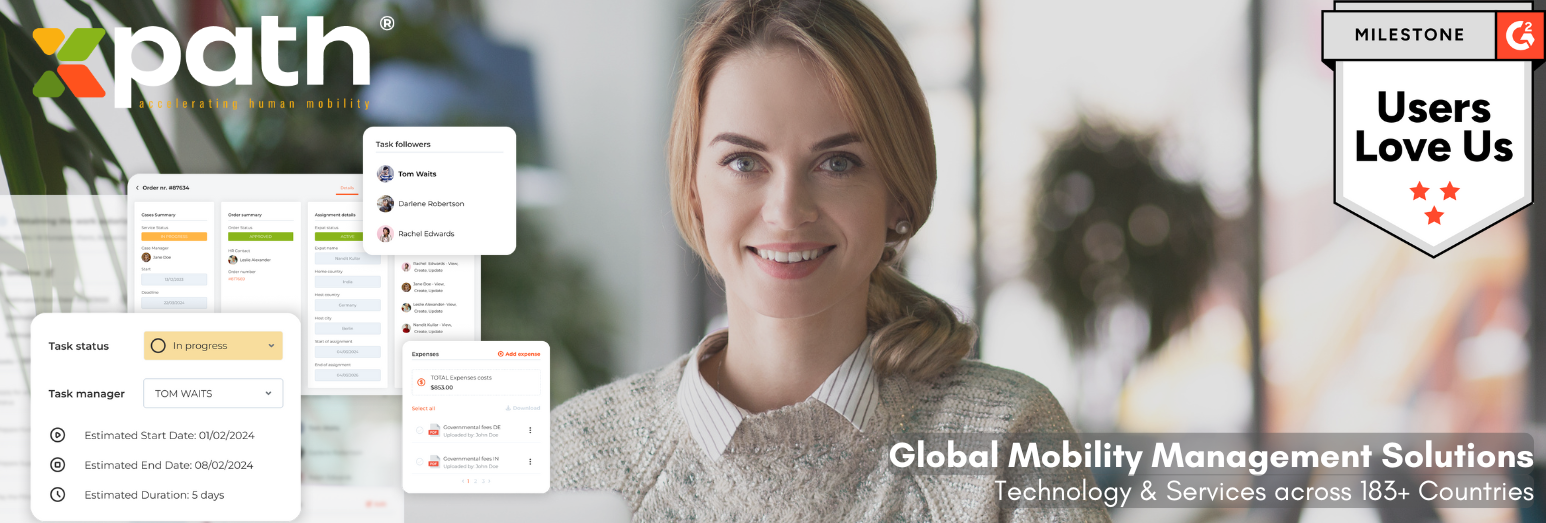
xpath.global provides HR teams and global mobility managers with a unified platform that centralizes assignment tracking, vendor coordination, compliance management, and employee support in one digital environment. Whether you are managing a single critical assignment or a portfolio of hundreds, the platform eliminates the fragmented processes that allow risks to go undetected. Connect with global mobility experts to discuss your program’s specific challenges. You can also explore proven relocation steps and the full corporate relocation services guide to build a stronger foundation for every assignment you manage.
Frequently asked questions
What are the main reasons expat assignments fail?
Top failure causes are unmet expectations, poor family adjustment, and cultural misalignment, not technical skill gaps. Addressing these human factors early in the assignment lifecycle dramatically reduces early return rates.
How do you measure expat assignment success?
Key metrics include goal achievement against the assignment charter, assignee performance ratings, family satisfaction survey results, and retention rates both during and after the assignment period.
Which training should be prioritized for expats?
Comprehensive pre-assignment training should prioritize cultural adaptation, language skills, compliance orientation, and family well-being programs, as these areas most directly influence assignment completion rates.
How can HR support expats during long-term international roles?
Long-term assignees benefit from structured ongoing support that includes regular wellbeing check-ins, mid-assignment reviews, and early repatriation planning to prevent over-embeddedness and post-assignment attrition.
Recommended
- Preparing Employees for Successful International Assignments In 2024 – xpath.global
- Expat repatriation: strategies for a smooth transition
- Top 8 strategies to improve expat employee experience in 2023
- Failed International Assignments: 40% Failure Rate – xpath.global
- Guide to relocation logistics: smooth and stress-free moves