






TL;DR:
- Disconnected processes and manual workflows cause delays, compliance risks, and poor employee experience.
- Implementing integrated digital platforms, standardized policies, and stakeholder alignment improves mobility efficiency.
- Regular KPI monitoring, feedback, and organizational engagement are essential for continuous mobility program improvement.
Managing international employee relocations through disconnected spreadsheets, fragmented vendor relationships, and manual approval chains is a scenario most global mobility professionals know well. Slow processes introduce compliance risks, strain HR teams, and undermine the experience of relocating employees at a time when talent retention depends heavily on how well organizations support their people through transitions. This guide walks through a structured approach to identifying operational gaps, establishing the right foundations, implementing scalable workflows, and building a culture of continuous improvement so that your mobility program runs with the precision and reliability your international assignments demand.
Key Takeaways
| Point | Details |
|---|---|
| Identify bottlenecks early | Spot process slowdowns or errors before digitizing your workflow for effective improvement. |
| Build strong digital foundations | Integrate centralized tools and clear policies to simplify compliance and relocation tasks. |
| Automate and standardize workflows | Use digital platforms and pre-set steps to minimize manual errors and accelerate approvals. |
| Focus on continuous improvement | Regularly monitor KPIs and feedback to refine your mobility operations over time. |
| Prioritize people and communication | Sustained success comes from strong stakeholder engagement, not just better software. |
Assess current mobility operations and common bottlenecks
Now that the need for improvement is clear, it’s important to pinpoint where the biggest challenges lie in your current process. Before redesigning workflows or investing in new technology, HR and mobility teams need an honest, structured evaluation of what is working and what is not. This assessment phase often surfaces surprising gaps, particularly in organizations that have grown their mobility programs organically without standardizing processes along the way.
Start by mapping every task involved in a single relocation: from the initial assignment authorization through immigration applications, tax briefings, vendor coordination, housing searches, and final settlement support. Document who is responsible for each step, which tools or systems are used, and how long each stage typically takes. This exercise alone frequently reveals duplicated efforts, undefined ownership, and steps that stall because no one has clear authority to move them forward.
As mobility best practices research confirms, common pain points in global mobility include lack of integrated technology, compliance complexities, and inefficient document workflows. These issues are not isolated to smaller programs. They appear consistently across organizations of all sizes and industries.
The table below summarizes the bottlenecks HR teams report most frequently:
| Bottleneck | Impact | Frequency reported |
|---|---|---|
| Slow internal approval cycles | Delayed assignment start dates | Very high |
| Decentralized data and documents | Compliance errors, duplicated effort | High |
| Fragmented vendor communication | Poor assignee experience | High |
| Manual compliance tracking | Missed deadlines, penalty risk | Moderate to high |
| Inconsistent policy application | Inequity and cost overruns | Moderate |
| Limited reporting and visibility | Poor decision-making | Moderate |
To help you streamline workforce operations effectively, watch for these warning signs that indicate your current approach needs an upgrade:
- Assignees frequently contact HR for status updates because no self-service tracking exists
- Compliance deadlines are tracked in email threads or personal calendars rather than a shared system
- Vendor invoices are difficult to reconcile against services actually delivered
- New team members take months to learn the mobility process because there is no documented workflow
- Reporting requires manual data gathering from multiple disconnected sources
- Different assignees receive different benefits or support levels due to policy inconsistency
Pro Tip: Survey recently relocated employees directly. Assignees often identify process delays and communication gaps that internal teams overlook because they are embedded in a different part of the workflow. A short, anonymous feedback survey can surface blind spots that no internal audit will find.
Key prerequisites for efficient mobility operations
With pain points identified, the next step is ensuring you have the essential prerequisites for true process improvement. Attempting to optimize mobility workflows without the right foundations in place often produces superficial fixes rather than sustainable change. The most successful programs share a consistent set of structural elements before any technology or process redesign begins.
Research shows that companies with integrated digital platforms and well-defined policies achieve higher relocation success rates, a finding that underscores why investing in foundations is not optional. The comparison below illustrates the practical difference between manual and digital-first mobility programs:

| Dimension | Manual approach | Digital-first approach |
|---|---|---|
| Data accuracy | Prone to human error and duplication | Centralized, validated, audit-ready |
| Compliance risk | High, reliant on individual vigilance | Reduced through automated checkpoints |
| Process speed | Slow, dependent on email and phone | Accelerated through workflow automation |
| Reporting | Time-consuming, often incomplete | Real-time dashboards and exports |
| Scalability | Difficult as assignment volume grows | Scales without proportional headcount increase |
| Employee experience | Inconsistent, frequently frustrating | Transparent, self-service enabled |
Before beginning any optimization work, ensure the following prerequisites are in place:
- Clear, documented assignment policies covering all assignment types, benefit structures, allowances, and eligibility criteria
- Centralized digital documentation so that immigration records, tax documents, and assignment letters are stored in one accessible system rather than scattered across personal drives or email folders
- Stakeholder alignment across HR, finance, legal, and business unit leadership so that decisions are made quickly and consistently
- Defined compliance checkpoints embedded in every assignment workflow, covering immigration, tax, and social security obligations
- Scalable technology infrastructure capable of handling multiple simultaneous assignments across different countries and time zones
- Executive sponsorship in both HR leadership and line management to ensure that mobility priorities receive the organizational support they require
The 5 strategic steps framework for simplifying global mobility reinforces that having internal champions at both the HR and management level is a decisive factor in program success. Without a dedicated advocate in senior leadership, even well-designed processes tend to stall when they compete with other organizational priorities.
Centralized data is particularly important to address early. When assignment data lives in multiple systems or in individual team members’ files, every reporting request becomes a manual exercise in reconciliation. Establishing a single source of truth from the start saves significant time as your program scales.
Step-by-step guide: How to streamline mobility workflows
With prerequisites in place, you can now implement structured improvements in your day-to-day mobility operations. The following sequence moves from foundational workflow design through to automation and ongoing governance, providing a practical path that HR and mobility teams can execute in stages rather than attempting a complete overhaul at once.
As digital tools enable automation of document management, task tracking, and compliance monitoring across relocations, organizations that build their workflows around technology from the start gain a significant operational advantage over those that digitize existing manual processes after the fact.
-
Map your end-to-end workflow in detail. Begin by documenting every step of the relocation process for each assignment type your organization manages, including short-term assignments, long-term transfers, and permanent relocations. Define task ownership, required inputs, expected outputs, and target completion times for each step. This map becomes the blueprint for everything that follows and allows you to identify redundancies before they are automated into your new process.
-
Select and implement the right automation tools. Evaluate platforms based on their ability to handle case management, document workflows, compliance tracking, and vendor coordination in a single environment. The mobility technology benefits of a purpose-built platform go well beyond task automation. They include real-time visibility into every active assignment, automated reminders for time-sensitive compliance actions, and structured vendor communication that replaces fragmented email chains.
-
Centralize all assignment data and documents. Migrate existing assignee records, policy documents, vendor contracts, and historical data into your chosen platform. Establish naming conventions, folder structures, and access permissions that will remain consistent as your team grows. Review the document management tips for global mobility programs to ensure your taxonomy supports both day-to-day operations and audit requirements.
-
Integrate compliance checkpoints directly into workflows. Every assignment workflow should include mandatory verification steps for immigration authorization, tax registration, and social security determination before key milestones can be marked complete. This prevents compliance actions from being deferred under time pressure. Use checklists and conditional logic within your platform to enforce these gates automatically.
-
Establish batch-processing and template-driven efficiencies. Standardize offer letters, assignment agreements, tax briefing documents, and housing authorization forms using templates. Where possible, process similar tasks in batches rather than one at a time. For example, run all monthly tax calendar updates simultaneously rather than managing each assignee’s tax obligations in separate, unrelated tasks.
-
Set regular review cycles with defined ownership. Schedule quarterly workflow audits to assess whether your process remains aligned with current policy, vendor performance, and regulatory requirements. Assign a named owner to each review so that accountability is clear.
Pro Tip: Configure automated notifications in your platform to alert both HR coordinators and assignees when a deadline is approaching or a task is overdue. Missed deadlines in immigration and tax compliance can result in fines, work authorization gaps, and assignee disruption. Automation makes proactive follow-up the default rather than the exception. Learn more about structuring these relocation steps effectively for different assignment types.
Monitoring, troubleshooting, and continuous improvement
After your new processes are operational, it’s vital to sustain and improve them over time. Initial implementation creates structure, but sustained performance requires deliberate measurement, rapid problem resolution, and a genuine organizational commitment to refining what has been built. Global mobility regulations, organizational structures, and assignee expectations all change over time, and your processes need to evolve alongside them.
Begin by defining and tracking the key performance indicators (KPIs) that signal whether your program is performing as intended. The most relevant KPIs for most programs include:
- Compliance rate: The percentage of immigration, tax, and social security obligations completed by their required deadlines
- Assignment completion within projected timeline: Tracking how often relocations are completed within the originally planned schedule
- Employee satisfaction scores: Collected through post-relocation surveys covering communication quality, support responsiveness, and overall experience
- Vendor performance ratings: Assessed against service level agreements for timeliness, accuracy, and assignee feedback
- Cost variance against budget: Measuring how closely actual relocation costs align with pre-assignment projections
- Time to assignment readiness: The elapsed time from assignment authorization to the date the employee is ready to begin work in the host location
Transparency in process performance and commitment to regular review cycles are not administrative overhead. They are the mechanism by which mobility programs maintain compliance and operational quality as business requirements and regulatory environments shift. Regular audits and employee feedback are crucial for sustainable mobility process improvement.
When KPIs reveal underperformance, the troubleshooting approach matters as much as the fix. Compliance rate drops, for instance, may indicate that checkpoints are being bypassed under workload pressure, that vendor handoffs are unclear, or that policy changes have not been incorporated into workflows. Each root cause requires a different response. Building a structured troubleshooting protocol, where deviations trigger a defined investigation process, prevents recurring issues from being repeatedly patched without resolution.
Formal feedback loops are equally important. Gather input from assignees at defined points during and after each relocation. Review this feedback alongside your KPI data in your regular audit cycles. Assign ownership of specific improvement actions and track them to completion. Exploring mobility solutions that incorporate built-in reporting and feedback tools can significantly reduce the overhead of this monitoring work.
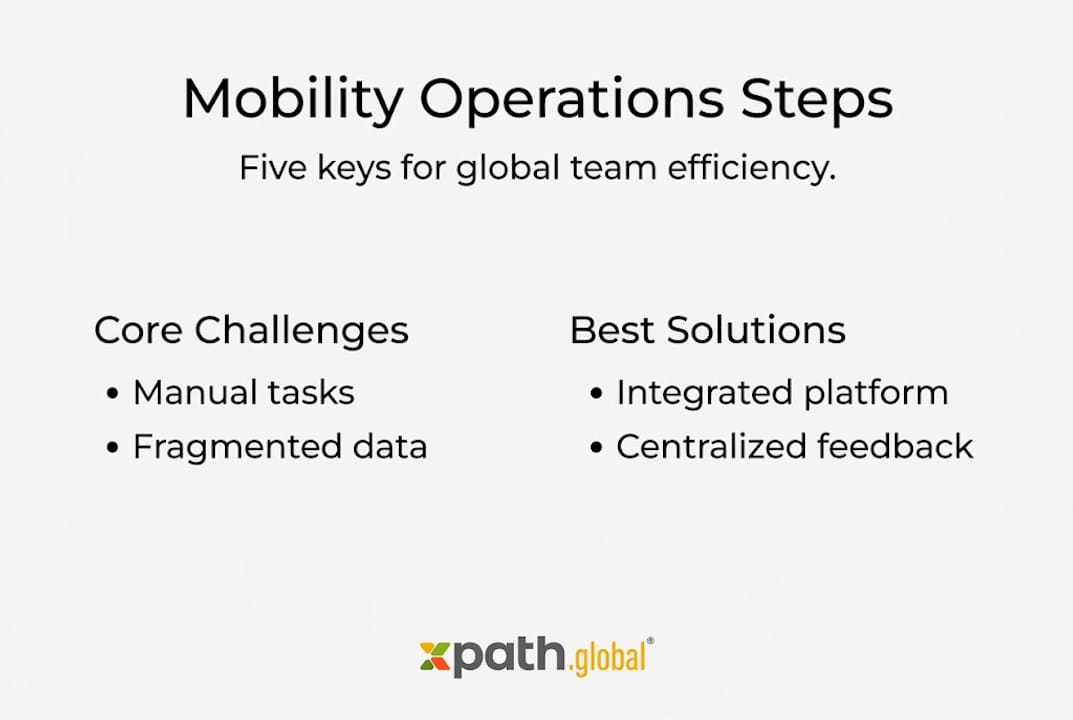
The uncomfortable truth about mobility operations: People over process and tech
Zooming out from the tactical steps reveals a dynamic that many mobility transformation projects underestimate. Technology platforms and documented workflows are necessary, and they deliver measurable value. But they are not sufficient on their own.
The most persistent failures in global mobility programs trace back not to inadequate software or poorly written policies, but to insufficient stakeholder engagement and communication. When HR coordinators, business unit managers, finance teams, and legal counsel are not aligned from the start, even the most well-designed process encounters friction at every handoff point. Technology amplifies whatever process it automates. If the underlying process relies on unclear ownership or informal agreements, automation will scale those problems rather than resolve them.
Sustained success in mobility operations starts with conversations, not implementations. Involve assignees, vendors, and internal stakeholders in defining what good looks like before selecting tools or redesigning workflows. A mobility professional who has spent time in the field knows that the most valuable insights often come from a candid conversation with an assignee about what actually happened during their relocation, not from a formal system audit.
Organizational engagement strategies, including those outlined in workforce engagement strategies for global HR teams, consistently show that buy-in from the people affected by a process determines whether it actually works in practice. Build that buy-in deliberately, and your technology investments will deliver what they promise.
Partner with experts to accelerate your mobility transformation
Mobility optimization requires the right combination of expertise, technology, and operational support. xpath.global delivers exactly that through a unified platform designed by global mobility professionals, covering everything from case management and compliance tracking to vendor coordination and employee self-service.
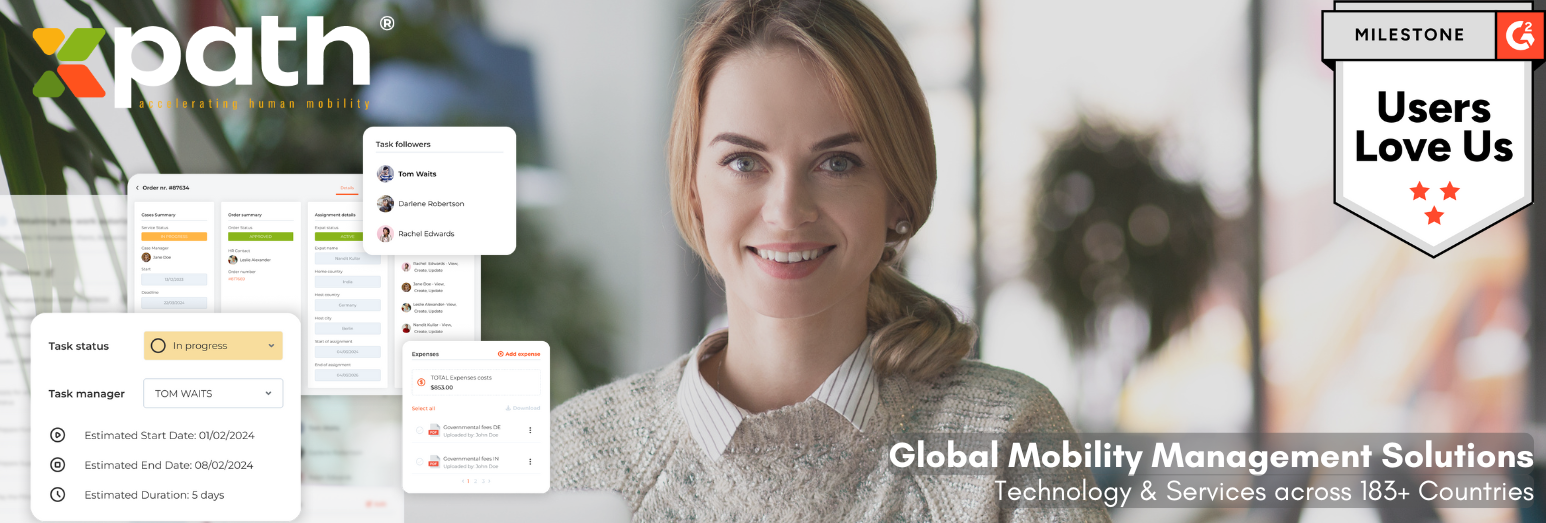
Whether you are designing a new program architecture, selecting global mobility technology that fits your scale, or looking for a complete relocation services guide to inform your vendor strategy, xpath.global provides the tools and expertise to move faster and more compliantly. Connect with an expert to discuss how xpath.global can support your specific mobility challenges and help you build a program that performs reliably at scale.
Frequently asked questions
What is the most common bottleneck in global mobility operations?
Manual document workflows and slow approval cycles consistently rank as the top bottlenecks for HR and mobility teams, creating delays that affect assignment start dates and increase compliance exposure.
How can technology help streamline mobility operations?
Digital tools automate routine tasks such as document collection, compliance reminders, and vendor communication, reducing human error and giving HR teams real-time visibility across all active assignments.
Which KPIs should HR track when optimizing mobility processes?
The most actionable KPIs include compliance completion rates, assignment timeline adherence, cost variance against budget, and employee satisfaction scores gathered through post-relocation surveys.
How can we ensure continuous improvement in mobility operations?
Schedule formal quarterly reviews of process performance data, and establish structured feedback loops with assignees and service providers so that recurring issues are identified and resolved through defined corrective actions rather than informal workarounds.