






TL;DR:
- Proper documentation and compliance checks are essential before recording relocation expenses.
- Digital workflows with ownership clarity reduce errors and ensure audit readiness.
- Non-compliance risks include exceeding caps, missing receipts, and incorrect expense classification.
Managing relocation expenses across international assignments is one of the most error-prone responsibilities in global mobility. With multiple cost categories, regulatory caps, lump-sum reimbursement rules, and cross-border tax obligations all running simultaneously, even experienced HR teams can miss critical documentation or misclassify expenses in ways that invite audits and financial penalties. This tutorial walks you through the exact process for setting up, executing, and reviewing a compliant, accurate expense tracking system for global assignments, so your team can manage complexity with confidence rather than scrambling to correct mistakes after the fact.
Key Takeaways
| Point | Details |
|---|---|
| Know compliance rules | Always check lump-sum and miscellaneous caps before processing relocation expenses. |
| Follow a set process | Use a clear step-by-step checklist to ensure all receipts and documentation are included. |
| Avoid common errors | Double-check for missing receipts, wrongly classified expenses, or exceeding stated caps. |
| Review and refine | Regularly perform audits and solicit feedback to keep your expense tracking process strong. |
What you need: Prerequisites and compliance essentials
Now, before logging the first expense, let’s set up for accurate, compliant tracking.
Effective expense tracking begins well before any receipts are collected. The foundation is documentation. Without the right records in place from day one of an assignment, you risk creating gaps that are difficult to reconstruct during an audit. Every relocation file should contain, at minimum, the following core documents:
- Travel receipts covering all transportation costs, including airfare, ground transport, and mileage logs
- Lodging invoices for temporary housing, hotel stays, or serviced apartments used during the transition period
- Lump-sum reimbursement forms that capture the agreed payment structure and the supporting data behind it
- Assignment letters or contracts that define the scope, duration, and benefit entitlements of the relocation
- Vendor invoices from third-party service providers such as moving companies, destination services firms, and tax advisors
- Tax documentation including social security certificates, shadow payroll records, and any applicable bilateral agreement certificates
Understanding the regulatory framework is equally important. According to the Selected Area of Cost Guidebook, lump-sum reimbursements require supporting data on specific elements such as transport and lodging, with no adjustments permitted for actual expenses incurred, and miscellaneous costs capped at $5,000. That last point catches many teams off guard. The cap is firm, and it applies regardless of what the employee actually spent.
The table below summarizes the key documentation requirements alongside the supporting data needed and a compliance tip for each category.
| Documentation type | Supporting data required | Compliance tip |
|---|---|---|
| Lump-sum reimbursement form | Transport and lodging breakdown | No adjustments for actuals; apply $5,000 miscellaneous cap |
| Travel receipts | Dates, routes, cost per trip | Retain originals; match against assignment dates |
| Lodging invoices | Provider name, dates, nightly rate | Confirm temporary housing qualifies under policy |
| Vendor invoices | Service description, amount, tax ID | Verify vendor is on approved list |
| Tax documentation | Shadow payroll records, bilateral certificates | Coordinate with tax advisor before filing |
Solid expense tracking for expatriates depends on having this infrastructure in place before the assignment begins. Building it retroactively is time-consuming and introduces the risk of incomplete records.
Pro Tip: Create a shared digital folder for each assignee at the start of every relocation, organized by document category. Require all stakeholders, including the employee, HR, and vendors, to upload documents directly to this folder within 48 hours of incurring a cost. This single habit eliminates the most common source of missing documentation.
Choosing the right expense tracking system tools at this stage also matters. Whether you use a dedicated global mobility platform or an integrated HR system, the tool must support multi-currency entry, category classification, and audit trail generation.
Step-by-step guide: Tracking expenses for global assignments
Once your essentials are in place, it’s time to track expenses with a repeatable process.
A structured, numbered workflow prevents the ad hoc approach that leads to errors. The following process applies to both short-term and long-term international assignments and can be adapted for lump-sum or cost-reimbursement structures.
-
Collect all receipts and invoices at the point of incurrence. Assign responsibility to the employee for personal expenses and to the HR coordinator for vendor-managed services. Use a mobile app or digital submission portal to capture receipts in real time rather than batching them at month-end.
-
Enter expenses into the tracking system within the defined submission window, typically within five business days of incurrence. Categorize each expense using your organization’s standardized cost codes: transport, lodging, miscellaneous, tax gross-up, and so on.
-
Verify eligibility against policy before approving any entry. Not all relocation costs are reimbursable. Cross-reference each expense against the assignment letter and your corporate relocation policy to confirm it falls within an approved category.
-
Apply regulatory caps at the category level. The $5,000 miscellaneous cap must be enforced during entry, not after the fact. Build this limit into your system so it flags any submission that would breach the threshold.
-
Attach supporting documentation to each expense entry. For lump-sum reimbursements, this means the transport and lodging breakdown data, not just the total figure. Auditors will look for this granularity.
-
Route for approval through a defined sign-off chain. A two-level approval process, one from the direct HR manager and one from finance, is standard practice for assignments above a defined cost threshold.
-
Generate expense reports at the close of each month or assignment phase. Reports should include a cost-to-budget comparison, a category breakdown, and a compliance status indicator for each line item.
The comparison below illustrates the practical difference between manual and digital tracking approaches, which is a distinction that matters significantly at scale.
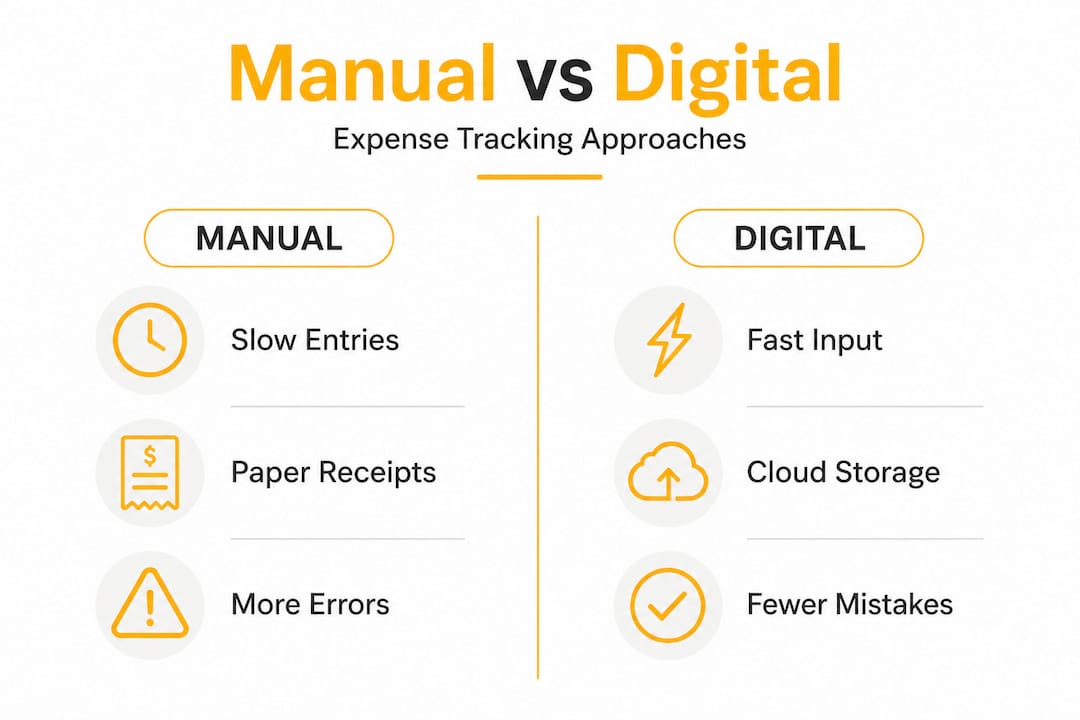
| Factor | Manual tracking | Digital tracking |
|---|---|---|
| Data entry speed | Slow; prone to transcription errors | Fast; often automated via receipt scanning |
| Cap enforcement | Manual check; easy to miss | System-enforced; flags breaches automatically |
| Audit trail | Fragmented across emails and spreadsheets | Centralized; timestamped and searchable |
| Multi-currency support | Requires manual conversion | Automated at point of entry |
| Reporting | Time-intensive; inconsistent formats | Automated; customizable dashboards |
| Compliance documentation | Attached manually; often incomplete | Linked automatically to each expense entry |
Exploring the full range of expense tracking options available to mobility teams reveals a clear pattern: organizations that invest in structured digital workflows reduce processing time and compliance errors significantly compared to those relying on spreadsheets and email chains.

Pro Tip: Double-check the $5,000 miscellaneous cap every time you process a new relocation. It is surprisingly easy to let small, uncategorized costs accumulate under a miscellaneous label until the total quietly exceeds the limit. Build a running total field into your tracking template so the cap is always visible.
For a broader view of how expense tracking for HR teams fits within a global mobility program, consider how each step above connects to downstream tax and compliance obligations. The data you collect during tracking directly feeds into gross-up calculations, shadow payroll, and year-end tax reporting.
Avoiding common mistakes and risk areas
Even with the right tools and a clear process, it’s easy to run into obstacles. Here’s how to stay on track.
The most misunderstood rule in relocation expense management is the “no adjustments for actuals” requirement. In practical terms, this means that once a lump-sum figure has been established based on projected transport and lodging costs, the reimbursement amount does not change to reflect what the employee actually spent. If the employee spent less, the organization does not recover the difference. If the employee spent more, the excess is not reimbursable under the lump-sum structure. Many HR teams incorrectly treat lump-sum payments as estimates to be reconciled against receipts, which creates both compliance risk and employee relations issues when expectations are misaligned.
Common mistakes that trigger audit findings or financial exposure include:
- Exceeding the $5,000 miscellaneous cap by accumulating small costs across multiple categories without a running total
- Missing or incomplete receipts for transport and lodging, which are specifically required to support lump-sum reimbursements
- Incorrect cost classification, such as logging a temporary housing deposit as a lodging expense when it should be tracked separately as a security deposit
- Failing to document the transport and lodging breakdown within lump-sum reimbursement records, leaving the payment unsupported during an audit
- Applying the wrong tax treatment to relocation allowances, particularly when gross-up calculations are not applied consistently across the assignee population
- Delayed submissions that create gaps in the audit trail and make it difficult to verify that expenses were incurred during the assignment period
Compliance warning: Organizations that cannot produce complete, itemized documentation for relocation reimbursements face significant risk during government contract audits. The miscellaneous cap of $5,000 and the prohibition on adjusting for actuals are bright-line rules. Violations can result in cost disallowances, financial penalties, and reputational damage.
Reviewing your policy mistake prevention strategies on a regular basis is essential, particularly as regulations evolve and assignment volumes grow. Policies that were compliant two years ago may no longer reflect current requirements. Schedule a formal policy review at least once per year and document the outcome.
Reviewing results and ensuring long-term compliance
After you’ve processed and logged expenses, final review ensures your system is error-proof and always improving.
The review phase is where many organizations lose discipline. Expenses are logged, reports are generated, and then the file is closed without a structured quality check. This approach works until it doesn’t, and when it fails, it tends to fail during an audit. A systematic review process protects against that outcome.
Follow these steps at the close of each assignment phase or reporting period:
-
Check completeness by confirming that every expense entry has an attached receipt or invoice, a cost code, and an approval record. Any entry missing one of these three elements should be flagged for resolution before the report is finalized.
-
Verify cap compliance across all categories, with particular attention to miscellaneous costs. Run a category-level summary and compare each total against the applicable policy limit.
-
Confirm supporting documentation for lump-sum entries, ensuring that the transport and lodging breakdown data is present and matches the approved reimbursement amount.
-
Reconcile against the assignment budget to identify variances. A cost overrun of more than 10% in any single category warrants a written explanation and, if recurring, a policy adjustment.
-
Archive the complete file in a secure, searchable system with a defined retention period, typically seven years for tax purposes, though this varies by jurisdiction.
For ongoing program health, build the following monthly audit checks into your team’s workflow:
- Review all open assignments for outstanding documentation
- Confirm that gross-up calculations have been applied to all taxable relocation benefits
- Obtain team sign-off on any policy exceptions or variances
- Update expense templates to reflect any regulatory changes from the prior month
- Circulate a brief compliance update to all HR coordinators managing active assignments
A critical element of the review process is the tax gross-up calculation. According to the Selected Area of Cost Guidebook, a gross-up at 28% on a $50,000 relocation uses a factor of 0.3889, yielding an additional $19,444 in gross-up liability. This figure must be captured in the expense record and reported correctly for payroll tax purposes. Missing or miscalculated gross-up amounts are among the most common findings in mobility-related tax audits.
Understanding the full scope of tax risks in global mobility helps HR teams contextualize why the review phase matters as much as the tracking phase itself. The data quality of your expense records directly determines the accuracy of your tax filings. For teams looking to build a more resilient program over time, optimizing mobility programs through structured review cycles and technology investment is the most reliable path to sustained compliance.
The reality HR rarely discusses: Why expense tracking systems fail
Finally, let’s address why even strong processes can fall short, and how to avoid that fate.
The uncomfortable truth about expense tracking failures is that they are rarely caused by a lack of process documentation. Most organizations have policies. Most have templates. Many have invested in technology platforms. And yet errors persist, caps are exceeded, and audits surface the same recurring findings year after year.
The root cause is almost always cultural and organizational, not technical. When HR coordinators are managing twenty active assignments simultaneously, expense tracking becomes a checkbox activity rather than a genuine compliance function. Forms are completed because they are required, not because the person completing them understands why each field matters. This is what we call checkbox compliance, and it is far more dangerous than having no process at all, because it creates the illusion of control without the substance.
Technology amplifies whatever behavior already exists in your team. A digital platform in the hands of a well-trained, accountability-driven team produces excellent results. The same platform in the hands of a team that views expense tracking as administrative overhead produces digital versions of the same errors that spreadsheets produced before.
The fix requires investment in two areas that organizations consistently undervalue: training and ownership clarity. Every HR coordinator managing an active assignment should be able to explain, without referring to a manual, what the $5,000 miscellaneous cap means, why lump-sum reimbursements cannot be adjusted for actuals, and how to calculate a basic gross-up. If they cannot, the training program needs to be redesigned.
Ownership clarity means that every expense record has a named accountable person, not a team or a department. When something goes wrong, the question “who owns this?” should have an immediate, unambiguous answer. Building this into your workflow design, rather than assuming it will emerge organically, is one of the highest-value changes a mobility program can make.
For teams committed to future-proofing expense management, the investment in culture and training will consistently outperform any technology upgrade made in isolation. Leadership visibility into compliance metrics, regular team debriefs on audit findings, and a genuine feedback loop between HR and finance are the structural elements that separate programs that improve over time from those that repeat the same mistakes.
Take your expense tracking further with xpath.global
If you’re ready to elevate your HR systems and global mobility impact, here’s how xpath.global can help.
Managing relocation expense tracking at scale requires more than good intentions and well-designed spreadsheets. xpath.global provides HR teams and relocation managers with a unified platform that centralizes expense tracking, documentation management, compliance workflows, and vendor coordination in a single digital environment.

Whether you are managing five assignments or five hundred, the platform’s automated workflows, cap enforcement tools, and audit-ready reporting capabilities reduce the manual burden on your team while improving compliance outcomes. You can connect with HR professionals at xpath.global to explore how the platform fits your specific program requirements. For organizations navigating the intersection of remote global mobility solutions and traditional relocation, xpath.global offers advisory support alongside its technology. If you are evaluating your current tools, the guide to selecting mobility technology provides a structured framework for making the right choice.
Frequently asked questions
What is the maximum allowed for miscellaneous relocation expenses?
Miscellaneous relocation expenses are capped at $5,000 under lump-sum reimbursement structures, and this limit must be supported by data on the underlying cost elements. Exceeding this cap without proper documentation is a common audit finding.
Are actual expenses required for lump-sum reimbursements?
No. Under lump-sum relocation reimbursements, no adjustments for actuals are permitted, meaning the reimbursement amount is fixed regardless of what the employee actually spent.
How do you calculate tax gross-up for relocation costs?
Multiply the relocation amount by the applicable gross-up factor. For a 28% rate on $50,000, the factor is 0.3889, yielding a gross-up amount of $19,444 that must be reported for payroll tax purposes.
What documents are essential for compliant expense tracking?
You should retain travel receipts, lodging invoices, and detailed transport and lodging breakdown data for all reimbursed expenses, particularly those processed under a lump-sum structure.
Recommended
- Tools to optimize global mobility programs – xpath.global
- Why automate expense tracking: boost efficiency in 2026
- Things to Consider For Avoiding Policy Mistakes in Global Mobility – xpath.global
- Expense tracking for HR teams in global mobility 2026
- Streamline your local moving workflow: a step-by-step guide