






TL;DR:
- International employee relocation in 2026 faces increased regulatory complexity and rising employee expectations.
- Building a successful program requires clear vendor evaluation, robust compliance management, integrated technology, and employee support.
- Embedding cultural intelligence and policy flexibility differentiates top-performing mobility programs and enhances talent retention.
International employee relocation in 2026 is no longer a straightforward logistical exercise. Regulatory frameworks are tightening across jurisdictions, employee expectations are rising, and the cost of compliance failures has never been higher. HR professionals and relocation managers are under pressure to deliver seamless cross-border assignments while simultaneously managing immigration timelines, tax equalization policies, social security contributions, and vendor performance. This guide provides a structured, evidence-backed framework for building or refining a global mobility program that achieves compliance, controls costs, and supports the employees who power international business growth.
Key Takeaways
| Point | Details |
|---|---|
| Set clear criteria | Start with defined selection metrics for cost, compliance, and employee success. |
| Manage compliance risk | Follow structured processes to meet legal requirements and avoid regulatory fines. |
| Leverage technology | Use modern platforms for data-driven relocation decisions and efficiency. |
| Prioritize employees | Offer end-to-end support for a positive relocation experience and higher retention. |
| Stay agile | Build flexibility into mobility programs to adapt to changing needs in 2026. |
Establish robust selection criteria for employee relocation
Building a high-performing relocation program begins long before the first employee boards a flight. It starts with defining the criteria your organization will use to evaluate relocation policies, vendors, and internal processes. Without clear benchmarks, mobility programs default to reactive decision-making, which increases costs and compliance exposure.
The most effective selection frameworks address three core dimensions: cost control, regulatory compliance, and employee satisfaction. Cost metrics should include total assignment cost projections, lump-sum versus managed-budget comparisons, and vendor fee transparency. Compliance metrics must cover immigration timelines, work authorization accuracy rates, and tax filing completion. Employee satisfaction metrics, often underweighted, should track relocation experience scores and post-assignment retention rates.
When evaluating relocation vendors, HR teams should assess technology capability, geographic coverage, and demonstrated expertise in the destination countries relevant to your workforce pipeline. Service provider quality and program innovation directly drive mobility outcomes, which means a vendor’s platform architecture matters as much as their service catalog. Ask vendors to demonstrate how their systems handle real-time compliance updates, multi-country assignment tracking, and employee self-service functionality.
Risk management and scalability deserve equal attention. A vendor that performs well for 20 relocations per year may not scale efficiently to 200. Evaluate whether the provider’s infrastructure, staffing model, and technology can grow with your program without degrading service quality.
Key criteria to include in your evaluation framework:
- Cost transparency: Itemized pricing, no hidden fees, clear escalation protocols
- Compliance depth: Jurisdiction-specific expertise in immigration, tax, and social security
- Technology integration: API connectivity with your HRIS and payroll systems
- Scalability: Capacity to handle volume increases without service degradation
- Employee experience: Self-service portals, mobile access, and multilingual support
- Reporting capability: Real-time dashboards and audit-ready documentation
Pro Tip: Engage stakeholders from finance, legal, and HR operations early in the criteria development process. Cross-functional input surfaces requirements that mobility teams alone may overlook, particularly around tax reporting and budget forecasting.
Implement effective compliance and risk management
After setting selection criteria, risk and compliance sit at the heart of a successful relocation program. In 2026, regulatory complexity is increasing for cross-border assignments and business travel, making structured compliance management a non-negotiable program component.
Every international assignment triggers a chain of compliance obligations. The sequence below reflects the standard lifecycle of compliance tasks that HR teams must manage:
- Pre-assignment: Confirm visa and work authorization requirements for the destination country
- Tax assessment: Determine home and host country tax obligations, including treaty eligibility
- Social security review: Identify applicable bilateral agreements to avoid dual contributions
- Payroll setup: Establish shadow payroll or split payroll arrangements as required
- Ongoing monitoring: Track assignment duration against permanent establishment and tax residency thresholds
- Assignment end: Manage tax equalization settlements, repatriation documentation, and benefit wind-down
Compliance failures carry real financial and operational consequences. Regulatory fines, back-tax assessments, and work authorization violations can disrupt business continuity and damage employer reputation in key markets. The table below summarizes the primary compliance risk categories and their potential impact:

| Compliance area | Key risk | Potential consequence |
|---|---|---|
| Immigration | Unauthorized work | Deportation, fines, entry bans |
| Tax | Missed filing deadlines | Penalties, interest, audit exposure |
| Social security | Dual contributions | Excess cost, employee financial liability |
| Permanent establishment | Prolonged business presence | Corporate tax liability in host country |
| Data privacy | Cross-border data transfer | Regulatory fines under GDPR and local law |
Addressing immigration compliance challenges proactively requires a documented audit process. Conduct quarterly compliance reviews across your active assignment population, flagging cases approaching duration thresholds or missing documentation. Assign clear ownership for each compliance task within your mobility management system to prevent gaps.
Statistic callout: Organizations without centralized compliance tracking are significantly more likely to incur regulatory penalties during cross-border assignments, underscoring the business case for systematic program management.
Leverage technology and data for streamlined mobility
Having secured compliance, the next step is boosting efficiency and precision through technology. Innovative technology is revolutionizing workforce management and mobility, and HR teams that adopt the right platforms gain measurable advantages in speed, accuracy, and cost control.
The global mobility technology landscape in 2026 includes several distinct platform categories. Relocation management systems (RMS) centralize case tracking and vendor coordination. Compliance platforms automate immigration and tax deadline monitoring. Analytics tools surface program performance data and cost trends. The most capable solutions combine all three functions in a single environment.
The comparison below highlights how integrated platforms differ from point solutions:
| Feature | Point solutions | Integrated platforms |
|---|---|---|
| Case management | Siloed per function | Unified across all workstreams |
| Compliance monitoring | Manual or separate tool | Automated, real-time alerts |
| Vendor coordination | Email and spreadsheets | In-platform marketplace |
| Reporting | Static exports | Live dashboards |
| Employee self-service | Limited or absent | Mobile app and portal |
| Cost projection | Manual calculation | Automated modeling |
When selecting mobility technology, prioritize platforms that offer workflow automation, HRIS integration, and a vetted vendor marketplace. Automation reduces manual errors in high-stakes processes like immigration document submission and tax calendar management, where a missed deadline can trigger cascading compliance issues.
Data-driven decision-making is equally important. Use assignment analytics to identify patterns in relocation cost overruns, assignment failure rates, and employee satisfaction scores. These insights allow HR leaders to refine policies, renegotiate vendor contracts, and allocate resources more strategically.
Key capabilities to prioritize in your technology evaluation:
- Automated workflow triggers for immigration and tax milestones
- Real-time cost tracking against approved assignment budgets
- Configurable compliance alerts by jurisdiction
- Employee-facing mobile tools for document upload and status tracking
- Audit-ready reporting for finance and legal review
Pro Tip: Before selecting a platform, map your current manual processes and identify the three highest-error-risk steps. Use that list as a non-negotiable automation requirement in vendor demonstrations.
Prioritize employee experience and assignment support
With the right technology in place, success ultimately relies on how employees are treated throughout their relocation journey. A technically compliant assignment that leaves the employee feeling unsupported is a program failure. Robust relocation policies improve employee engagement and retention, making the employee experience a direct driver of program ROI.
Effective support structures begin before departure. Pre-assignment counseling sessions help employees and their families understand what to expect, from housing timelines to school enrollment processes. Clear, written communication about benefit entitlements, reimbursement procedures, and escalation contacts reduces anxiety and prevents misunderstandings that erode trust.
“The quality of the relocation experience shapes how an employee perceives the organization’s investment in their career. A well-supported move signals that the company values the individual, not just the role.”
Once the employee arrives in the host location, integration support becomes the priority. Local orientation services, language assistance, and community connection resources accelerate cultural adjustment and reduce the productivity dip that typically accompanies international moves. These services, often underestimated, have a measurable effect on assignment completion rates.
Retaining talent through proactive mobility and talent retention strategies requires ongoing engagement throughout the assignment lifecycle. Schedule regular check-ins at 30, 90, and 180 days post-arrival to identify emerging issues before they escalate. Use pulse surveys to capture employee sentiment and adjust support levels accordingly.
Best practices for employee relocation support:
- Pre-departure counseling: Cover logistics, cultural expectations, and family support options
- Clear benefit documentation: Provide a single-source summary of all entitlements and reimbursement steps
- Destination services: Arrange housing search, school enrollment, and local orientation
- Ongoing check-ins: Structured touchpoints at key assignment milestones
- Repatriation planning: Begin return planning at least 90 days before assignment end to prevent talent loss
- Family support: Address spousal career assistance and dependent schooling proactively
Employee satisfaction during relocation is not a soft metric. It is a competitive advantage. Organizations that invest in structured support consistently report higher assignment completion rates and stronger post-assignment retention, directly protecting the return on their mobility investment.
A new perspective on relocation: What most guides miss
Most relocation best-practice guides focus on process, checklists, and technology. Those elements matter. But the programs that consistently outperform their peers share a less-discussed quality: relational and cultural intelligence embedded at every stage of the mobility lifecycle.
Compliance frameworks and vendor marketplaces are table stakes in 2026. What differentiates a genuinely effective program is the capacity to respond to the human complexity of an international move. An employee relocating to a country with a fundamentally different social structure, communication style, or professional culture faces challenges that no workflow automation can resolve. HR leaders who build cultural coaching and emotional support into standard assignment packages see measurably better outcomes.
Agility in policy design is equally undervalued. Rigid, one-size-fits-all assignment policies create friction when employees face unexpected circumstances, whether a family health issue, a political shift in the host country, or a business restructure mid-assignment. Programs that build exception-handling protocols and flexible benefit structures into their design respond faster and retain more talent. Retaining top talent through global mobility requires treating flexibility as a structural feature, not an exception.
Pro Tip: Build a formal policy exception review process into your mobility governance framework. Documented flexibility is far less costly than an assignment failure.
Take the next step: Streamline your global mobility strategy
The best practices outlined above provide a clear path toward a more compliant, efficient, and employee-centered relocation program. Putting them into practice requires the right tools, the right partners, and a structured approach to program governance.
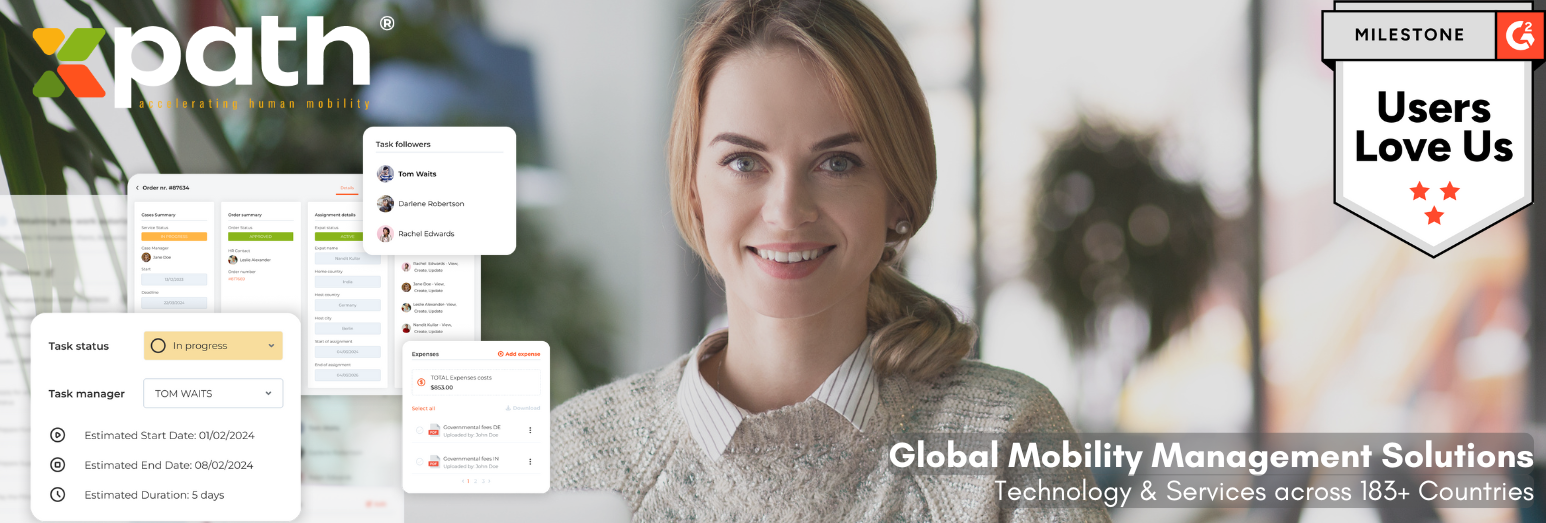
xpath.global provides HR teams and relocation managers with a unified platform that connects case management, compliance tracking, vendor coordination, and employee support in a single digital environment. Whether you are refining an existing program or building one from the ground up, our resources are designed to accelerate your progress. Explore the employee relocation steps that leading organizations follow, review our mobility compliance guide to benchmark your current program, or connect with xpath experts to discuss your specific mobility challenges.
Frequently asked questions
What are the main compliance risks in global relocation for 2026?
The biggest risks are non-compliance with tax, immigration, and social security rules in destination countries, which can lead to legal penalties and business disruption. Regulatory complexity is increasing for cross-border assignments, making structured compliance monitoring essential for every active assignment.
How can technology help HR manage complex relocations?
Tech platforms automate workflows, ensure compliance, and provide real-time analytics for better relocation decision-making. Innovative technology is revolutionizing workforce management and mobility, giving HR teams the visibility and control they need to manage assignments at scale.
What best practices improve employee retention during international relocation?
Provide holistic support including cultural integration, clear communications, and robust relocation packages to keep employees engaged and decrease attrition. Robust relocation policies improve employee engagement and retention, directly protecting the organization’s return on its mobility investment.
How do you compare different relocation service providers?
Develop clear criteria covering cost transparency, compliance depth, technology capability, and scalability, then request references and conduct structured demonstrations. Service provider quality and program innovation drive mobility outcomes, so evaluation rigor at the selection stage pays dividends throughout the assignment lifecycle.
Recommended
- Global mobility best practices: streamline relocation & boost engagement
- 5 Strategic Steps to Simplify Global Mobility with xpath.global – xpath.global
- Tools to optimize global mobility programs – xpath.global
- Master employee relocation: 4 proven global mobility steps
- Guide to relocation logistics: smooth and stress-free moves