"Managing multiple relocation vendors creates significant operational and compliance risks. Using centralized platforms improves coordination, reduces errors, and enhances compliance monitoring. Effective global mobility requires strategic vendor selection, integration, and continuous performance oversight."
Managing an international employee relocation means coordinating an average of 7 or more vendors per assignment, creating a web of interdependencies that can unravel quickly when a single handoff fails. Immigration lawyers, tax advisors, moving companies, temporary housing providers, and destination services specialists must all operate in sync, often across multiple time zones and regulatory jurisdictions. For HR professionals and global mobility managers, the administrative load is substantial, with coordination consuming the majority of available working hours. This article presents a practical, step-by-step framework for optimizing vendor collaboration, reducing compliance risk, and building a more resilient global mobility program.
Identifying vendor collaboration challenges in global mobility
Fragmented vendor management is not merely an inconvenience. It is a measurable operational and compliance risk that affects program outcomes, employee experience, and organizational cost. When multiple vendors operate in silos, information gaps emerge, deadlines are missed, and regulatory requirements fall through the cracks. The scale of the problem is well-documented. Up to 70% of global mobility professionals’ time is consumed by administrative coordination, with as many as 21 potential communication breakdowns occurring per single relocation. That figure is striking because it means that even a well-resourced HR team is spending the majority of its capacity managing logistics rather than strategy. The consequences of poor managing relocation vendors extend beyond internal inefficiency. Employees caught in delayed relocations face disrupted onboarding, housing uncertainty, and diminished confidence in their employer. From a compliance standpoint, a missed work permit renewal or an incorrect tax filing can trigger regulatory scrutiny that is both costly and time-consuming to resolve. Common pain points that global mobility managers report include: 🔸Receiving conflicting status updates from different vendors on the same case 🔸Inability to track which compliance tasks are pending across jurisdictions 🔸No single source of truth for assignment documentation 🔸Reactive rather than proactive issue management 🔸Difficulty holding vendors accountable without formal SLA frameworks
"“The real cost of vendor fragmentation is not just time. It is the compounding risk that accumulates when no single party has full visibility into the relocation lifecycle.”"
Adopting mobility best practices requires first acknowledging that the coordination model itself, not just individual vendor performance, is often the root cause of program failures. Pro Tip: Map every vendor touchpoint for a single relocation from start to finish. If you count more than 15 distinct handoffs, your program has structural coordination risk that no amount of vendor quality can fully offset. With the challenge defined, let’s explore what’s needed to address these risks.
Preparing for successful vendor collaboration: Selection and integration
Once you understand the risks, the next step is to prepare and select the right vendors. Effective vendor collaboration begins long before a relocation case is opened. It starts with deliberate selection criteria and a structured integration process that ensures every provider can operate within your program’s technical and compliance requirements. The most reliable vendor selection criteria for global mobility programs in 2026 include cost transparency, compliance expertise across immigration and tax domains, technology integration capability, scalability, and geographic coverage. Each criterion serves a specific risk-mitigation function. Building a pre-vetted supplier list is a foundational step that many organizations skip in favor of reactive procurement. The steps below provide a structured approach: Define your program’s top five relocation corridors and map the service categories required for each. Establish minimum compliance standards, including licensing, insurance, and jurisdictional expertise. Evaluate technology integration capability, specifically whether vendors can connect with your HRIS or a relocation workflow optimization platform via API or data feed. Conduct reference checks focused on compliance track record and communication responsiveness. Formalize service level agreements with defined response times, escalation paths, and performance metrics. Integrating vendor technology with your HRIS or a centralized mobility platform is not optional for programs managing more than a handful of relocations annually. Integrated platforms have demonstrated measurable improvements in process speed and error reduction when vendor data flows automatically rather than through manual entry. Review your relocation services guide periodically to ensure your vendor portfolio reflects current geographic priorities and regulatory environments. Markets change, and a vendor that performed well in one corridor two years ago may not have the current expertise your program requires. Pro Tip: When evaluating vendor technology integration, ask specifically whether the provider supports bidirectional data exchange. One-way data feeds create the illusion of integration while still requiring manual reconciliation on your end. Strategic vendor relationship strategies also include regular performance reviews, not just onboarding assessments. Quarterly scorecards aligned to SLA metrics keep vendors accountable and give your team early warning signals before performance issues affect live cases.
Executing efficient vendor collaboration: Platform-based coordination
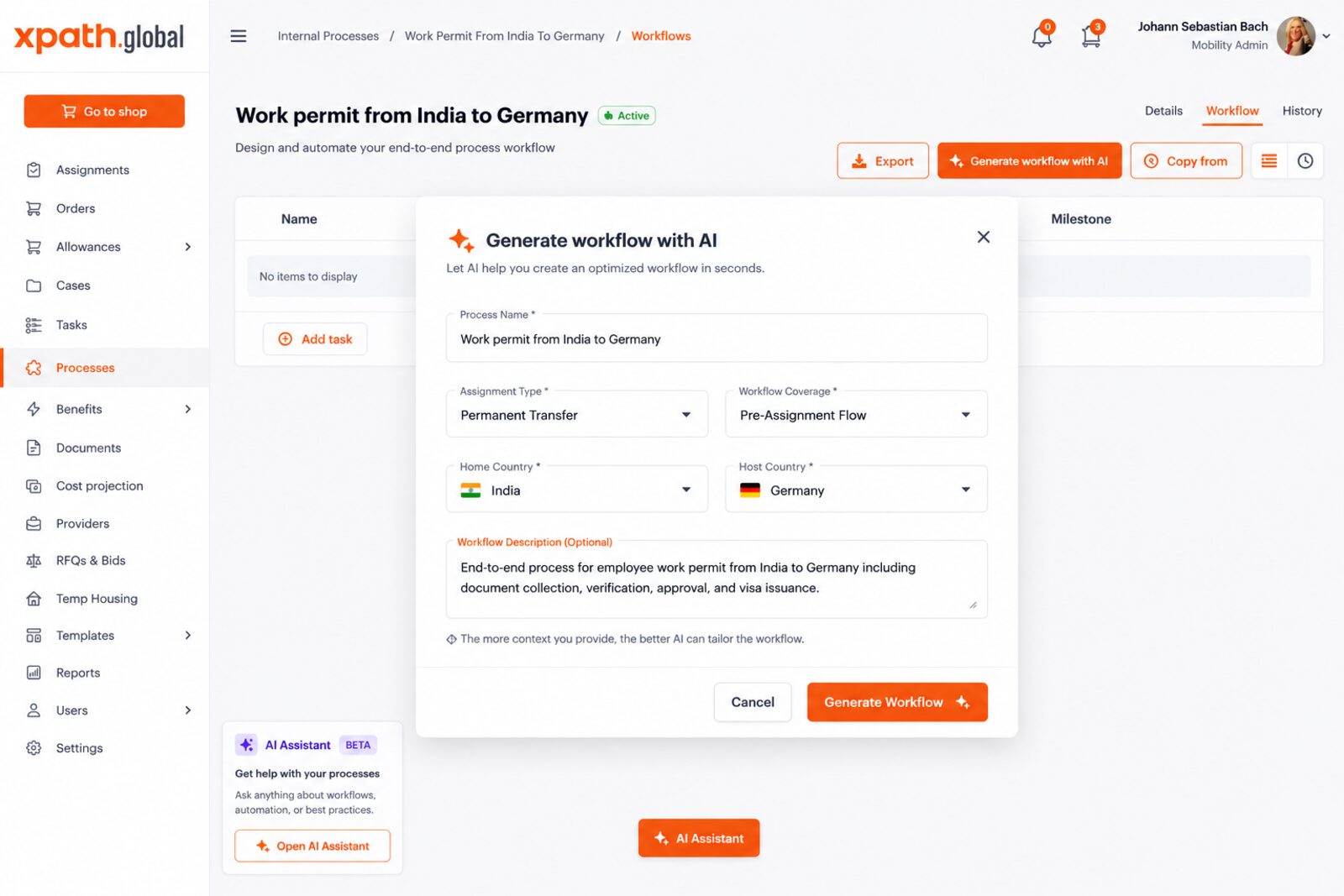
After selecting and preparing the right vendors, executing efficiently involves shifting to integrated solutions. The operational gap between knowing which vendors to use and actually coordinating them in real time is where most programs lose efficiency. Platform-based coordination closes that gap by replacing fragmented email threads and spreadsheets with unified, automated workflows. Integrated platforms enable unified case management, automated compliance monitoring, and efficient vendor coordination across every stage of the relocation lifecycle. The practical benefits are significant and measurable. Core features of platform-based vendor coordination include: 🔸Unified dashboards that display real-time status across all active cases and vendor tasks 🔸Automated compliance alerts that trigger when permit renewals or tax deadlines are detected 🔸Vendor marketplace access connecting HR teams to vetted providers without separate procurement processes 🔸Milestone tracking with automated notifications to both HR teams and employees 🔸Audit trails that document every vendor interaction for compliance and dispute resolution purposes Compared to email and spreadsheet-based coordination, platform solutions deliver measurably faster case closure times, fewer data entry errors, and greater compliance confidence. When a work permit status changes, an integrated platform updates the case record, notifies the relevant stakeholders, and flags any downstream tasks that are now time-sensitive. Email cannot replicate that speed or reliability.
"“Multi-vendor coordination is operationally the highest-risk element of any international relocation program. The shift to single-platform accountability is not a technology preference. It is a risk management decision.”"
Explore mobility optimization tools that align with your program’s scale and complexity. For high-volume programs, the ROI on platform adoption is typically realized within the first program cycle through reduced error rates and faster case resolution. When evaluating options, mobility technology selection should prioritize platforms that offer both case management and vendor marketplace functionality in a single environment. Splitting those functions across two systems reintroduces the fragmentation you are working to eliminate.
Verifying and troubleshooting the vendor collaboration process
With execution underway, ongoing verification and troubleshooting ensures sustainable collaboration and compliance. Even well-designed vendor programs encounter exceptions. The difference between programs that recover quickly and those that experience cascading failures is the presence of structured monitoring, clear escalation paths, and documented accountability. A practical monitoring checklist for vendor engagement and compliance includes: 🔸Confirm all vendors have acknowledged case assignments within defined SLA windows. 🔸Verify that compliance milestones, such as work permit applications and tax registrations, are on schedule. 🔸Review vendor-submitted documentation for completeness before forwarding to authorities. 🔸Track employee feedback on vendor interactions to identify service quality issues early. 🔸Audit cost submissions against pre-approved estimates to detect budget variances. Edge cases such as mid-assignment country changes, delayed visas, and tax complications require escalation paths and cross-departmental alignment involving HR, Legal, and Finance. These situations cannot be resolved by a single vendor or a single team member. They require coordinated decision-making with clear authority levels. Common troubleshooting scenarios and recommended responses: 🔸Communication breakdown between vendors: Convene a structured case review with all relevant parties and document agreed actions with deadlines. 🔸Regulatory delay or denial: Escalate immediately to your immigration legal partner and notify the employee with a revised timeline. 🔸Vendor non-performance: Activate your pre-vetted backup supplier list and document the performance failure for SLA review. 🔸Tax compliance discrepancy: Engage your tax advisor and cross-reference with your HRIS data to identify the source of the error.
"“Escalation is not a sign of program failure. It is evidence that your program has the maturity to recognize when standard processes are insufficient and act accordingly.”"
Pro Tip: Maintain a single-point accountability log for every active relocation case. Assign one internal owner who is responsible for coordinating all vendor interactions on that case. This eliminates the ambiguity that allows issues to go unaddressed. Refer to relocation program mastery resources to build escalation frameworks that are proportionate to your program’s complexity. Smaller programs may manage with a simple tiered escalation matrix, while enterprise programs require formal governance structures with defined response SLAs. Align your best practices for verification with the specific regulatory environments of your most active relocation corridors.
Rethinking vendor collaboration in global mobility
Having reviewed the full framework, a more nuanced observation emerges. Most HR teams approach vendor collaboration as a coordination problem when it is, in fact, a structural accountability problem. The instinct is to add more communication, more check-ins, more email threads. But volume of communication is not the same as clarity of accountability. Legacy, fragmented approaches do not just create inefficiency. They distribute accountability so broadly that no single party feels responsible for the outcome. Multi-vendor coordination is the number one operational risk in global mobility, and the programs that manage it best are not those with the most vendors or the most communication. They are the ones that have consolidated accountability into a single platform and a single point of ownership. The real cost of avoiding platform adoption is not the subscription fee you save. It is the compliance exposure, the employee attrition linked to poor relocation experiences, and the HR capacity permanently locked in administrative tasks. Forward-thinking organizations are recognizing that collaboration strategy insights point consistently toward consolidation, not expansion, of vendor management infrastructure.
Unlock seamless vendor collaboration with xpath.global
The framework outlined in this article reflects the operational reality that effective vendor collaboration requires more than good intentions. It requires the right technology infrastructure. xpath.global provides a unified global mobility platform that connects HR teams, employees, and service providers in a single digital environment. With access to over 60,000 services across 183 countries, automated compliance monitoring, and centralized case management, xpath.global addresses the coordination challenges described throughout this article. Whether you are building a vendor network from scratch or restructuring an existing program, connect with HR experts to discuss your specific requirements. You can also explore mobility technology options or review resources on how to master employee relocation at scale.
Frequently asked questions
What is the main risk of managing multiple vendors for international relocation?
The main risk is coordination failures that lead to compliance gaps, increased costs, and potential regulatory fines. Average relocations involve 7+ vendors with up to 21 communication breakdowns per case.
How do integrated platforms improve vendor collaboration?
Platforms centralize communication, automate compliance checks, and provide unified dashboards for faster, safer case management. Integrated platforms empower unified case management and automated alerts that replace manual coordination.
What criteria should HR use to select relocation vendors?
HR should prioritize cost transparency, compliance expertise, technology integration, scalability, and broad geographic coverage. These vendor selection criteria directly reduce compliance risk and improve program predictability.
What happens when visa delays or tax issues arise mid-relocation?
Edge cases require escalation paths and cross-department collaboration with HR, Legal, and Finance teams to resolve complex mid-assignment complications efficiently.
Recommended
- Strategies for Managing Vendor Relationships in Global Mobility - xpath.global
- Top 5 Vendor Collaboration Platforms for Global HR 2026
- Managing relocation vendors for global mobility success
- Aligning Technology with Your Global Mobility Vendors - xpath.global