






TL;DR:
- Effective global mobility vendor collaboration requires shared goals, open data exchange, and joint problem solving. Implementing real-time analytics, standardized KPIs, and structured review processes transforms coordination into strategic partnership, reducing costs and delays. Utilizing centralized data platforms and performance-based incentives ensures sustainable, data-driven collaboration that delivers measurable results.
Relocating employees across borders is never a simple transaction. It requires coordinated action from immigration attorneys, tax advisors, destination service providers, moving companies, and housing specialists, often simultaneously and across multiple time zones. Yet a persistent gap exists between organizations that merely coordinate these vendors and those that genuinely collaborate with them. The difference is measurable: better coordination of relocation vendor management translates directly into lower cost variances, fewer compliance incidents, and faster time to productivity for relocated employees. This article delivers proven examples, practical frameworks, and comparison tools to help global mobility leaders close that gap.
Key Takeaways
| Point | Details |
|---|---|
| Benchmark with KPIs | Use evidence-based KPIs like time-in-transit and cost variance to evaluate vendor collaboration success. |
| Adopt analytics platforms | Transition from spreadsheets to shared dashboards for real-time reporting and smarter decisions. |
| Try real-world models | Implement practices like joint KPI reviews and digital document sharing for better results. |
| Align incentives | Link rewards and pricing tiers to collaborative performance to motivate continuous improvement. |
| Choose the right model | Select your vendor collaboration model based on needs—transactional, managed, or strategic—for best fit. |
Key criteria for effective vendor collaboration
Now that we’ve set the stage, let’s pinpoint what effective vendor collaboration looks like and how you can measure it.
True collaboration is fundamentally different from basic coordination. Coordination means passing instructions from one party to another and tracking task completion. Collaboration, by contrast, involves shared goals, open information exchange, mutual accountability, and joint problem solving. A vendor who understands your mobility program’s strategic priorities will flag customs bottlenecks before they delay a relocation, not after. That distinction matters enormously at scale.
To move from coordination to collaboration, organizations need to define and track the right performance metrics. Relocation logistics KPIs borrowed from freight operations include well-established frameworks that global mobility teams can adapt effectively. The core metrics worth tracking are:
- Time-in-transit: The average number of days from assignment initiation to completed move, segmented by region and vendor.
- Customs delay frequency: The percentage of shipments or cases delayed due to documentation or regulatory issues.
- Cost variance: The gap between estimated and actual costs per relocation, tracked vendor by vendor.
- Claims rate: The percentage of relocations generating damage, loss, or service failure claims.
- Documentation completeness score: Whether required immigration, tax, and relocation documents were submitted accurately and on time.
- SLA adherence rate: The percentage of cases where service level agreement commitments were met.
These metrics do more than measure performance. They create a shared language between your team and your vendors, making difficult conversations about service failures specific, objective, and constructive rather than adversarial.
Organizations with mature analytics practices reduce both relocation time delays and cost variances significantly compared to those relying on ad hoc reporting. When your data shows that a particular vendor’s customs delay frequency is 18% above the program average, you have a starting point for a productive operational conversation rather than a vague complaint.
Pro Tip: Start with a focused dashboard of just five or six KPIs rather than tracking everything at once. Tie those metrics directly to service credits or tiered pricing in vendor contracts so there is a financial incentive for both parties to improve continuously. Review vendor management best practices to understand how leading organizations structure these incentive mechanisms.
Regular benchmarking through monthly scorecards and quarterly reviews creates the feedback loops that drive continuous improvement. Without consistent measurement, even well-intentioned vendor relationships plateau and eventually drift toward purely transactional dynamics.
6 real-world examples of vendor collaboration in global mobility
With criteria in hand, let’s explore concrete examples that showcase genuine collaboration in action.
The following examples represent models that global mobility leaders across industries have used successfully. Each can be adapted to different organizational sizes, vendor structures, and regional complexity levels.
-
Joint service level workshops to harmonize metrics. One approach used by large multinational companies involves quarterly workshops where internal mobility teams and key vendors jointly define SLA targets for the upcoming period. Rather than the organization setting targets unilaterally and vendors accepting or disputing them, both sides negotiate metrics based on current operational realities. This creates genuine buy-in and significantly reduces disputes about whether targets were reasonable.
-
Co-developed digital document platforms for real-time visibility. Some organizations have partnered with immigration and relocation vendors to build or configure shared document portals where both parties can upload, review, and approve documents in real time. This eliminates the email chains, version confusion, and missed deadlines that characterize manual document management. Employees also gain visibility into where their case stands, reducing anxiety and support call volume.
-
Monthly joint KPI reviews with scorecard-based incentives. Monthly performance reviews using a shared scorecard are among the most consistently effective collaboration tools. When vendors know that their pricing tier for the following quarter depends on their SLA adherence rate and claims rate this quarter, their operational teams prioritize compliance-related processes. This is not punitive; it rewards strong performance and creates a structured pathway for vendors who fall short to recover.
-
Collaborative customs delay troubleshooting teams. Cross-functional teams that include both internal mobility staff and vendor operations personnel can work together to diagnose and resolve recurring customs delays. This model proved particularly effective for organizations moving employees into markets with complex import regulations, such as India, Brazil, and parts of the Middle East, where local vendor knowledge combined with corporate policy context reduces resolution time substantially.
-
Shared analytics dashboards reducing spreadsheet dependency. Moving away from spreadsheet-based reporting toward a centralized, shared analytics environment is a critical upgrade for any mobility program with more than 50 relocations annually. When vendors contribute data directly to a shared platform rather than submitting static reports, discrepancies are visible immediately rather than discovered weeks later during reconciliation. The examples of mobility vendor collaboration that have generated the most measurable efficiency gains consistently involve this kind of centralized data infrastructure.
-
Tiered pricing agreements linked to performance benchmarks. Structuring vendor contracts so that pricing tiers reflect performance outcomes aligns financial incentives with service quality. A vendor achieving 95% SLA adherence qualifies for preferred status and higher volumes. One achieving 78% faces a contract review. This model requires clear metric definitions upfront and consistent measurement throughout, which is exactly why the KPI frameworks described earlier are so important.
“Vendors are generally perceived as collaborative, but the gap lies in analytics and reporting maturity. Teams that invest in KPI scorecards, consistent reporting processes, and shared data environments make collaboration operationally effective rather than aspirational.”
This insight from the KPMG Global Mobility Benchmarking Survey reinforces a core theme: intention without infrastructure produces inconsistent results.
Pro Tip: Look for quick wins by integrating vendor status updates directly into your team’s central dashboard. Even a simple automated feed showing case status from two or three key vendors can eliminate hours of weekly manual follow-up. Explore vendor collaboration strategies that have proven effective at different program maturity levels.

Comparison of collaboration models using KPI frameworks
To clarify which collaboration approach might fit your situation, let’s compare popular models using key performance metrics.
Organizations operate across a spectrum of vendor relationship models. The right model depends on program volume, vendor market maturity in the relevant regions, and your internal capacity for performance management. The KPI frameworks for relocation benchmarking such as transit time, cost variance, and SLA adherence apply across all models but are used with different intensity at each level.
| Collaboration model | KPI focus | Example practices | Typical outcomes |
|---|---|---|---|
| Transactional | Cost per transaction, basic SLA adherence | Purchase orders, invoice matching, reactive issue resolution | Predictable but low-improvement trajectory; high manual overhead |
| Managed | SLA adherence, cost variance, documentation completeness | Regular performance reviews, scorecard tracking, defined escalation paths | Moderate efficiency gains; reduced error rates; limited strategic alignment |
| Strategic partnership | Full KPI suite including claims rate, customs delays, employee satisfaction | Joint workshops, shared dashboards, tiered pricing, joint problem-solving teams | Measurable cost reduction; faster relocation timelines; high vendor accountability |
Most organizations with fewer than 100 annual relocations begin at the transactional or early managed stage. The investment required to move to strategic partnership is significant but generates returns at scale. Supplier analytics tools play a central role in enabling the transition from managed to strategic partnership because they automate the reporting burden that otherwise makes advanced collaboration unsustainable.
Signs that your organization may need to upgrade its current collaboration model include:
- Repeated manual reconciliation of vendor invoices against actual services
- Frequent disputes about whether SLAs were met
- No formal process for sharing performance data with vendors between contract renewals
- Employee complaints about inconsistent service quality across regions
- Cost variance on relocations regularly exceeding 10% to 15% of budget
If more than two of these apply, the managed or strategic partnership model is likely a better fit than your current approach.
How to operationalize vendor collaboration for lasting results
Armed with comparisons, the next step is translating examples into sustainable operational routines.
Sustainable vendor collaboration does not emerge from a single workshop or one round of scorecard implementation. It requires structured processes that become embedded in the operating rhythm of your global mobility program. The KPMG Global Mobility Benchmarking Survey emphasizes that analytics and reporting maturity are prerequisites for making collaboration operationally effective, not optional add-ons.
Follow these steps to operationalize vendor collaboration:
- Define shared KPIs with vendor input. Hold a joint alignment session with each strategic vendor at the start of the contract period to agree on the six to eight metrics that will govern performance reviews. This prevents disputes later about whether targets were realistic.
- Build a centralized tracking environment. Whether through a purpose-built mobility platform or a configured analytics workspace, establish a single location where performance data from all vendors is visible to your team in near real time.
- Schedule regular review cycles. Monthly operational reviews focus on current-period performance and immediate corrective actions. Quarterly strategic reviews assess trends, recalibrate targets, and discuss contract adjustments.
- Formalize the scorecard process. Both your team and the vendor should sign off on each monthly scorecard. This creates shared accountability and an auditable record that protects both parties.
- Align financial incentives to scorecard outcomes. Link pricing tiers, volume allocations, or contract renewal terms to scorecard performance so that vendors have a tangible financial stake in improving results.
- Review mobility program best practices periodically to incorporate new benchmarking data and adapt your KPI framework as your program scales.
Pro Tip: Make scorecard sign-off a mutual process rather than a top-down assessment. When vendors contribute to the data and co-sign the results, they take greater ownership of improvement actions.
The following sample scorecard illustrates how a monthly benchmarking review might be structured:
| Vendor | KPI | This month | Last month | Trend | Notes |
|---|---|---|---|---|---|
| Vendor A | SLA adherence | 94% | 91% | ↑ Improving | On track for preferred tier |
| Vendor A | Cost variance | +6% | +9% | ↑ Improving | Review pricing model Q3 |
| Vendor B | Customs delay frequency | 12% | 8% | ↓ Declining | Escalate to ops team |
| Vendor B | Documentation completeness | 97% | 96% | → Stable | Maintain current process |
| Vendor C | Claims rate | 2.1% | 3.4% | ↑ Improving | Credit issued for Q2 delays |
Consistent use of this format across all vendors creates a standardized language for performance conversations and reduces the time each review requires.
A fresh take: Why spreadsheet-free, analytics-driven collaboration is the future
As we look beyond mechanics, let’s rethink what sustainable collaboration really demands in a data-driven era.
Many global mobility teams invest genuine effort in building vendor relationships and still fail to realize the full value of those relationships. The reason is structural, not relational. When performance data lives in email threads and spreadsheets, collaboration is limited by the speed at which humans can compile, reconcile, and distribute that data. By the time a monthly report lands on a manager’s desk, the operational window to act on it has often closed.
The real sabotage of vendor collaboration is not poor intentions; it is poor data infrastructure. A vendor relationship that looks collaborative in its meeting cadence but relies on static monthly spreadsheets is operating with a systematic information delay that guarantees reactive management rather than proactive partnership.
The shift to real-time, shared analytics platforms changes the fundamental dynamic. When both your team and your vendors can see performance data as it accumulates, rather than in batched monthly reports, the conversation shifts from reviewing past failures to preventing future ones. Early-warning signals, such as a rising customs delay frequency in a specific corridor, become visible while there is still time to intervene. This is the strategic advantage that analytics-driven vendor collaboration generates: not just better reporting, but earlier decisions.
The KPMG Global Mobility Benchmarking Survey makes clear that analytics maturity is the distinguishing factor between organizations that describe vendor relationships as collaborative and those that can demonstrate collaboration through consistent performance outcomes. The former is a perception. The latter is a competitive advantage.
Organizations that continue to manage vendor relationships through manual reporting cycles will find it increasingly difficult to attract and retain high-performing vendors, because sophisticated providers know that manual environments limit their own operational visibility too. The future of global mobility vendor management is transparent, data-shared, and mutually accountable.
Take vendor collaboration to the next level with xpath.global
If you’re ready to embed these examples into your organization, there’s no need to approach it without support.
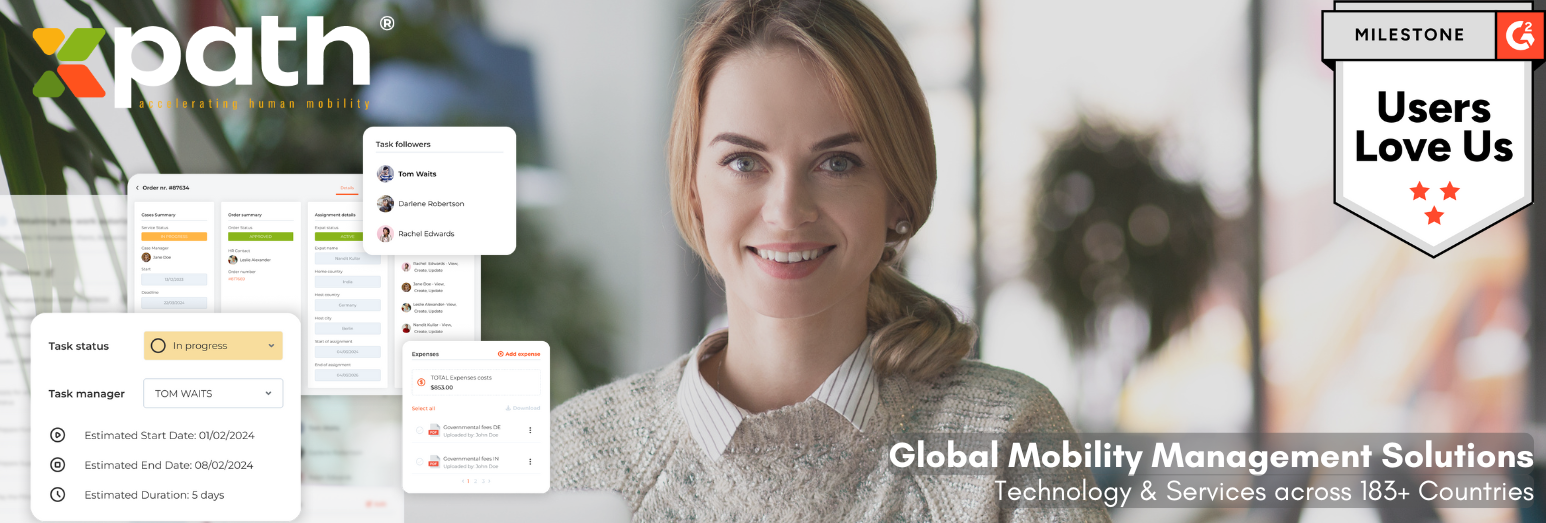
xpath.global provides a unified platform designed specifically to eliminate the manual coordination, spreadsheet dependency, and fragmented vendor management that undermine even well-intentioned collaboration programs. With built-in scorecard functionality, centralized analytics, and access to a mobility services marketplace spanning over 600 vetted providers across 183 countries, organizations can move from transactional vendor management to strategic partnership at a pace that fits their program maturity.
Whether you are establishing your first formal KPI framework or scaling an existing program across multiple regions, xpath.global’s platform and consulting team can help you design, implement, and sustain the collaboration structures that deliver measurable results. Learn more about the xpath.global competitive edge or connect directly with an HR solutions consultation to discuss your specific program needs. The tools and expertise to make vendor collaboration genuinely operational are available now.
Frequently asked questions
What are the top KPIs to track for relocation vendor collaboration?
Key KPIs include time-in-transit, customs delay frequency, cost variance, claims rate, documentation completeness, and SLA adherence, all drawn from established relocation KPI frameworks that give mobility teams and vendors a shared performance language.
How can organizations move from basic vendor management to true collaboration?
Organizations can adopt shared KPIs, real-time analytics dashboards, and regular joint performance reviews with vendors to achieve genuine collaboration, since analytics maturity is what makes the transition from aspiration to operational reality possible.
Why is benchmarking important in vendor collaboration?
Benchmarking provides data-driven insight into vendor performance, enabling fair comparisons and targeted improvements, and empirical KPI benchmarks for relocation give mobility teams a validated foundation rather than requiring each organization to build frameworks from scratch.
What are common pitfalls when operationalizing vendor collaboration?
Reliance on spreadsheets, inconsistent reporting cycles, and undefined financial incentives are the most common obstacles, and the KPMG benchmarking data confirms that analytics and reporting maturity are the critical investments organizations must prioritize to make collaboration sustainably effective.
Recommended
Previous article