






TL;DR:
- Cloud mobility platforms significantly automate relocation workflows, reducing administrative work by up to 70%.
- They enable real-time collaboration across distributed teams with centralized case management and secure data sharing.
- These platforms offer scalable, cost-effective solutions with strong security and compliance features for global organizations.
Managing international employee relocations has never been a simple task. HR teams and relocation managers at mid-to-large enterprises face a layered challenge: coordinating immigration timelines, maintaining tax compliance across multiple jurisdictions, managing vendors, and keeping employees informed, all while operating under intense cost pressure. Cloud-based mobility platforms have emerged as a direct response to this operational complexity, offering centralized workflows, real-time collaboration, and built-in compliance tools. This article examines the core benefits these platforms deliver, with practical insights to help mobility professionals make informed technology decisions.
Key Takeaways
| Point | Details |
|---|---|
| Workflow automation | Cloud-based mobility platforms cut admin work and streamline HR processes for relocations. |
| Real-time collaboration | Teams can access and coordinate employee mobility cases across locations and time zones instantly. |
| Enterprise security | Cloud vendors deliver top-tier data protection and compliance that meets HR needs worldwide. |
| Scalability and savings | Cloud mobility solutions adapt to changing workforce sizes and reduce IT costs for enterprise programs. |
Streamlined workflows and admin reduction
For most global mobility teams, administrative work is the single largest drain on capacity. Relocation requests arrive through email, compliance documents are tracked in spreadsheets, and approval chains stretch across multiple departments and time zones. The result is slow processing, missed deadlines, and avoidable compliance gaps.
Cloud-based platforms address this directly. Workflow efficiency improves significantly when repetitive tasks such as document collection, status updates, and approval routing are automated. Cloud-based mobility tools can reduce administrative work by up to 70%, freeing HR professionals to focus on higher-value activities such as policy design and employee support.
A structured relocation workflow on a cloud platform typically follows this sequence:
- Relocation request submitted by the business unit through the platform.
- Automated compliance check triggered against destination country requirements.
- Document collection initiated with the employee via a self-service portal.
- Offer letter and assignment terms generated and routed for approval.
- Vendor assignments made automatically based on destination and service type.
- Milestone tracking activated for immigration, housing, and tax registration tasks.
Centralized document management is another critical benefit. When all employee records, visa applications, tax forms, and assignment letters are stored in a single case management system, retrieval is fast and audit trails are automatic. Role-based access ensures that HR managers, legal teams, tax advisors, and employees each see only the information relevant to their function, reducing both confusion and data exposure risk.
Effective internal process management also means that escalation paths are clearly defined. When a compliance deadline is at risk, the platform flags the issue and routes it to the appropriate team member without requiring manual oversight.
Pro Tip: Map your current relocation process manually before selecting a platform. Identifying where handoffs break down or approvals stall will help you prioritize which automation features deliver the most immediate value for your team.
Enhanced collaboration and remote accessibility
Once workflows are streamlined, the next operational challenge is coordination across distributed teams. Global mobility programs typically involve HR business partners, immigration attorneys, tax advisors, destination service providers, and the relocating employee. Without a shared platform, communication fragments across email threads, messaging apps, and phone calls.

Cloud mobility platforms resolve this by creating a single environment where all stakeholders operate simultaneously. Team collaboration improves when HR, employees, and vendors can access mobility cases and documents anywhere, facilitating faster responses and reducing the time lost to information requests.
The practical benefits for distributed teams include:
- Real-time case visibility for all assigned stakeholders, regardless of location.
- Integrated task tracking that shows which actions are pending, overdue, or completed.
- Automated notifications that alert vendors and employees when their input is required.
- Document sharing with version control, eliminating confusion over outdated files.
- Centralized messaging tied to specific cases, creating a permanent record of decisions.
This architecture is particularly valuable when managing relocations across multiple time zones. A tax advisor in Singapore, an immigration attorney in Germany, and an HR manager in Chicago can each contribute to the same case without waiting for business hours to align.
“Cloud platforms enable teams to access mobility cases and documents anywhere, facilitating faster responses.” This capability is not simply a convenience feature. For time-sensitive immigration filings or compliance deadlines, the ability to act immediately regardless of location is operationally critical.
Remote work has also changed how HR teams operate internally. Mobility professionals working from different offices or home locations need the same access to case data as those in a central headquarters. A well-designed digital ecosystem ensures that no team member is working from an incomplete picture of an assignment’s status.
Robust security and compliance management
With greater collaboration comes the necessity for secure and compliant information sharing. Global mobility programs handle some of the most sensitive data in an organization: passport details, tax identification numbers, salary information, family records, and immigration history. The security standards applied to this data are not optional.
Cloud security and compliance at the enterprise level now includes encryption at rest and in transit, detailed audit trails, role-based access controls, and regular third-party security assessments. Leading cloud vendors meet frameworks such as GDPR and SOC 2, making them suitable for regulated industries including financial services, healthcare, and energy.
| Security feature | Cloud platform | On-premise solution |
|---|---|---|
| Automatic security updates | Yes | Manual, IT-dependent |
| GDPR and SOC 2 compliance | Built-in | Requires custom implementation |
| Audit trails | Automated | Often manual |
| Access control | Role-based, granular | Varies by system |
| Disaster recovery | Vendor-managed | Organization-managed |
| Scalable encryption | Standard | Requires additional investment |
For compliance specifically, the advantage of cloud platforms extends beyond data security. An international compliance platform enables HR teams to maintain compliance on international assignments by embedding regulatory checks directly into case workflows. When an employee is assigned to a new country, the platform can automatically surface the relevant work permit requirements, tax registration deadlines, and social security obligations.
Key compliance areas managed through cloud platforms:
- Work permit and visa tracking with expiry alerts.
- Cross-border tax compliance, including shadow payroll requirements.
- Social security coordination under bilateral agreements.
- GDPR-compliant data handling for EU-based employees.
- Audit-ready documentation for immigration and tax authorities.
One important nuance: organizations in highly regulated sectors or those subject to strict data sovereignty laws may have concerns about where their data is physically stored. In these cases, evaluating a platform’s data residency options and regional hosting infrastructure is essential before deployment.
Scalable and cost-effective global mobility solutions
Security and compliance are vital, but scalability ensures the platform grows with your organization. One of the most practical advantages of cloud-based mobility platforms is their ability to handle fluctuating employee volumes without requiring additional infrastructure investment.
Traditional on-premise systems require upfront hardware purchases, IT maintenance budgets, and lengthy upgrade cycles. When relocation volumes spike during a corporate restructuring or market expansion, these systems often cannot respond quickly. Cloud platforms, by contrast, scale on demand.
Cloud solutions often lower IT costs and support expansion into new regions without infrastructure investment, making them particularly well suited to organizations entering new markets or managing seasonal relocation peaks.
Pricing models available for cloud mobility platforms:
- Subscription-based pricing: A fixed annual or monthly fee covering a defined number of users or cases. Predictable budgeting, suitable for stable mobility programs.
- Pay-as-you-go: Charges based on actual usage, such as number of relocations processed. Ideal for organizations with variable or project-based mobility needs.
- Hybrid models: A base subscription combined with usage-based fees for additional services such as vendor marketplace access or advanced analytics.
- Enterprise licensing: Custom pricing for large organizations with high case volumes and complex integration requirements.
| Deployment model | Upfront cost | Scalability | Maintenance burden | Time to deploy |
|---|---|---|---|---|
| Cloud platform | Low | High | Vendor-managed | Weeks |
| On-premise | High | Limited | Internal IT | Months |
| Hybrid | Medium | Moderate | Shared | Variable |
For cost containment in global mobility programs, the financial case for cloud platforms is strong. Reduced IT overhead, faster deployment, and elimination of manual processing costs combine to produce measurable savings over a two to three year horizon.
Pro Tip: When budgeting for a cloud mobility platform, account for peak relocation seasons such as Q1 and Q3, when assignment volumes typically increase. Negotiating flexible capacity terms in your contract avoids overpaying during slower periods while ensuring coverage when demand rises.
Our perspective: Applying cloud platforms for maximum HR impact
After reviewing the evidence, one conclusion stands out clearly: the technology itself is rarely the limiting factor in a successful cloud mobility deployment. Vendor selection matters more than most organizations realize, not because of feature lists, but because of implementation quality, support responsiveness, and the vendor’s depth of understanding of global mobility as a discipline.
The hidden benefits of well-implemented platforms are often overlooked in procurement discussions. Onboarding speed for new HR team members improves dramatically when case history, documents, and communications are centralized. Audit readiness, which can otherwise consume weeks of preparation, becomes a near-automatic byproduct of structured case management.
The contrarian insight worth noting: not every mobility process benefits from automation. Highly sensitive cases involving employee hardship, complex family situations, or politically sensitive assignments require human judgment that no workflow engine replaces. The strongest programs use technology to handle the routine efficiently, reserving human attention for the cases that genuinely need it.
Organizations that approach cloud platform adoption with this balanced perspective tend to achieve a sustainable competitive advantage over those that treat it purely as a technology upgrade.
Next steps: Choosing the right global mobility platform
For HR teams and relocation managers ready to act on these insights, the path forward starts with an honest assessment of your current program’s gaps.
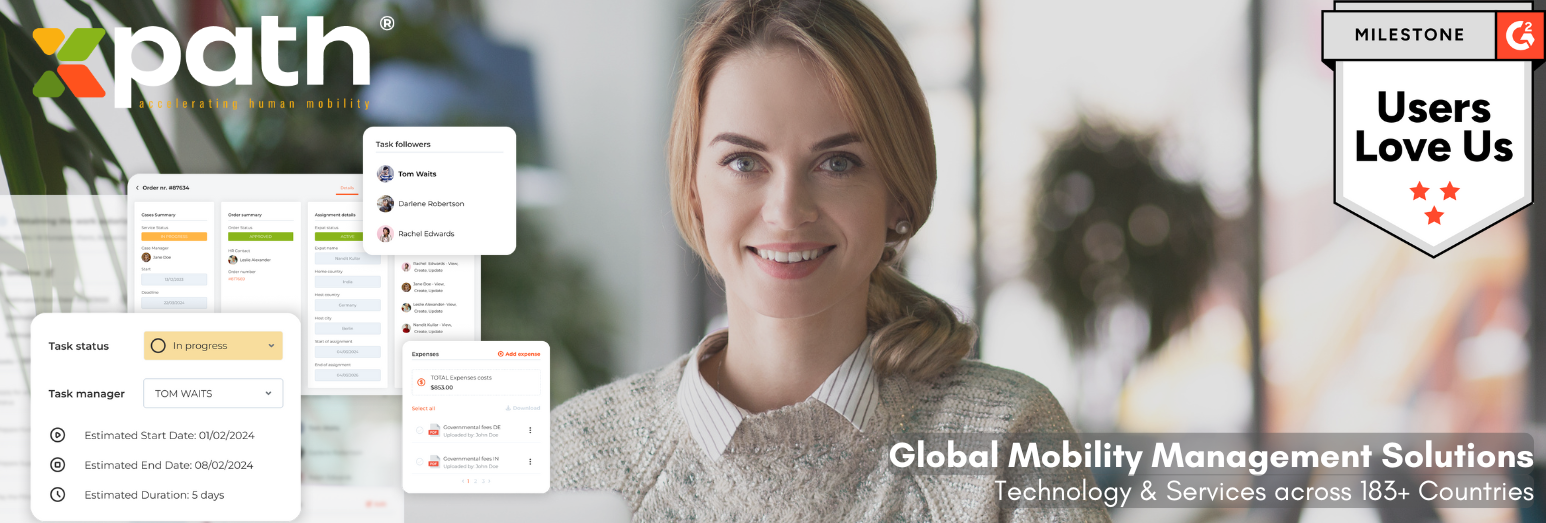
xpath.global provides the tools, expertise, and global marketplace to support that transition. Whether you are evaluating your first cloud mobility platform or looking to replace a fragmented system, the mobility technology guide offers a structured framework for making the right decision. For a more detailed view of what a modern relocation program looks like in practice, the employee relocation steps resource walks through each phase of the assignment lifecycle. When you are ready to speak with specialists, contact HR experts at xpath.global to discuss your organization’s specific requirements.
Frequently asked questions
How do cloud mobility platforms improve HR workflow efficiency?
They automate repetitive admin tasks, offer centralized document management, and enable quicker approvals for relocation processes. Cloud-based mobility tools can reduce administrative work by up to 70%, directly increasing team capacity.
Are cloud-based mobility platforms secure enough for handling sensitive employee data?
Leading providers offer enterprise-grade security including GDPR and SOC 2 compliance, with robust data encryption and access logs. Enterprise-grade security makes cloud platforms suitable for regulated industries handling sensitive personal and financial data.
Can cloud mobility platforms scale with my company’s expansion?
Yes, most solutions scale easily to handle increasing employee volumes and provide flexible pricing models to support growth regions. Cloud solutions lower IT costs and support entry into new markets without requiring additional infrastructure investment.
What is the main compliance risk with using cloud software for relocation?
The main risk is failing to align with local regulatory frameworks, so platforms with built-in compliance checks are essential for international assignments. A single international compliance platform can surface jurisdiction-specific requirements automatically, reducing the risk of missed obligations.
Recommended
- Why use mobility platforms: 70% less admin, higher ROI
- Top 5 Vendor Collaboration Platforms for Global HR 2026
- The Future of Compensation and Benefits in HR – xpath.global
- 10 Powerful Ways Global Mobility Technology Is Changing Workforce Management – xpath.global
- What Is Remote Work – Impact On Modern Careers